Breathing
Exhale as you pull through the working range and inhale during the controlled return. Keep the breath steady and avoid straining with a prolonged breath hold.
Getting your next view ready…
The Flutter Kicks primarily works the glutes, with the hamstrings supporting the movement. It is a strength movement that needs no equipment.
 1 / 2
1 / 2How to
Movement instructions
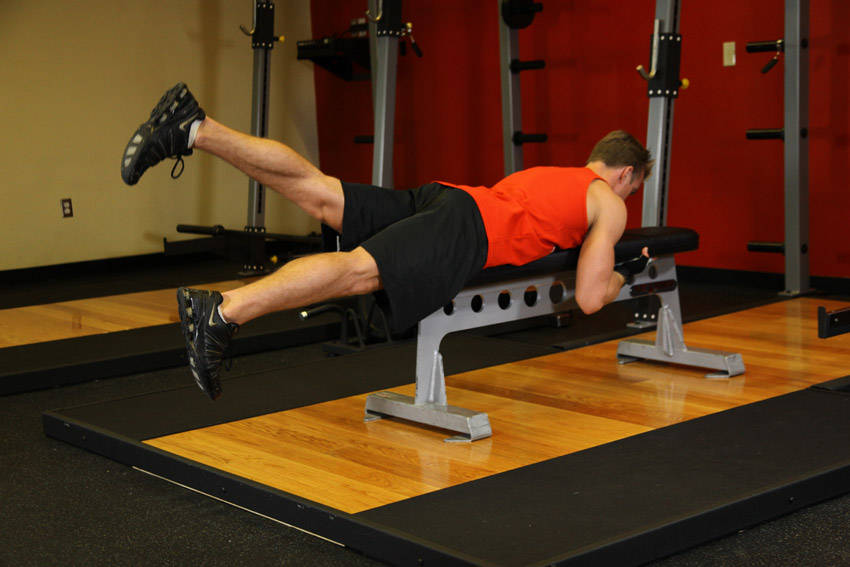
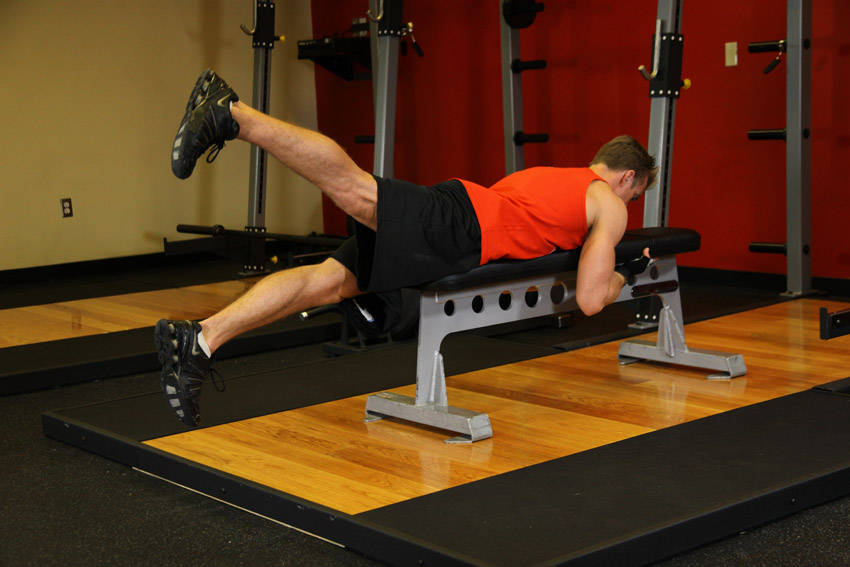
On a flat bench lie facedown with the hips on the edge of the bench, the legs straight with toes high off the floor and with the arms on top of the bench holding on to the front edge.
Squeeze your glutes and hamstrings and straighten the legs until they are level with the hips. This will be your starting position.
Start the movement by lifting the left leg higher than the right leg.
Then lower the left leg as you lift the right leg.
Continue alternating in this manner (as though you are doing a flutter kick in water) until you have done the recommended amount of repetitions for each leg. Make sure that you keep a controlled movement at all times. Tip: You will breathe normally as you perform this movement.
Technique guidance
Exhale as you pull through the working range and inhale during the controlled return. Keep the breath steady and avoid straining with a prolonged breath hold.
General guidance based on the exercise and equipment. It is not personal coaching or medical advice.
Your progress
Keep the same exercise variation, range of motion and recording method when comparing Flutter Kicks sessions.
Repetitions and completed sets.
Example: 10, 9 and 8 completed reps. Keep each set separate instead of recording only the total.
Compare repetitions using the same variation and range. A different variation needs its own history; extra reps are not directly comparable if the movement changes.
Read the tracking guideThe examples show how to keep a record. They are not workout targets or a personalised training plan.
See how Jijibisha tracks your progressMuscles
Muscle guide
Glutes is the primary muscle group. The lighter highlights show the supporting muscles involved in the movement.
In depth
The name flutter kicks is used for two different exercises. The movement pictured in this Jijibisha entry is the prone bench flutter kick, performed face down to train the glutes and hamstrings. The better-known floor variation is performed face up and challenges the abdominal muscles and hip flexors.
Quick answer: For prone bench flutter kicks, lie face down with your hips near the bench edge, brace against the bench, raise both straight legs until they are roughly in line with your torso, and alternate small controlled kicks. Keep the motion at the hips, avoid swinging, and stop if the bench position bothers your lower back.
Prone flutter kicks primarily train the glutes, with the hamstrings assisting as each leg extends behind the body. The lower back and trunk muscles work to keep the pelvis and torso stable, but the exercise should not feel like repeated uncontrolled back extension.
This is different from supine floor flutter kicks, which are usually programmed as an abdominal exercise. If your goal is trunk training, browse the abdominal exercise library. For more hip-extension movements, see the glute exercise library.
Small, repeatable kicks are more useful than chasing height. The pelvis should remain supported while the legs alternate from the hip joints.
Fast kicks can create momentum without maintaining muscular tension. Slow the rhythm until each change of direction is deliberate.
Driving the feet far above the hips can turn the exercise into excessive lower-back extension. Raise the legs only as high as you can while keeping the movement comfortable and controlled.
A slight natural knee bend is fine, but repeated knee flexion changes the exercise and may reduce the hip-extension demand. Think about reaching the legs long behind you.
If the bench slides, rocks, or does not give you a secure handhold, choose another exercise. A floor-based hip extension or machine movement is a better option than improvising an unsafe setup.
Prone bench flutter kicks and floor flutter kicks share an alternating leg pattern, but their positions and main training effects differ.
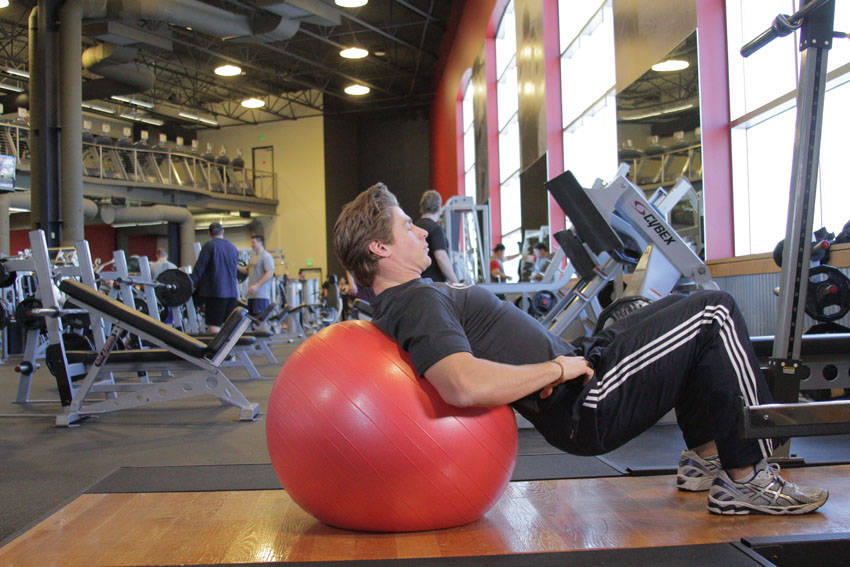
For floor flutter kicks, press your lower back only as firmly into the floor as is comfortable, keep the kicks small, and raise the legs if holding them low causes the back to arch or feel strained. Stop if you cannot maintain a controlled trunk position.
Start with two or three sets of 10-20 alternating kicks per leg, or use controlled intervals of roughly 15-30 seconds. The exact number matters less than maintaining the same range and tempo throughout the set.
Progress by adding a few controlled repetitions, extending the interval slightly, or pausing briefly at the top of each kick. Avoid adding ankle weights until you can keep the bench position stable and perform the unweighted movement without lower-back discomfort.
Record whether you counted total kicks or kicks per leg in your workout tracker. That small note keeps future sessions comparable.
The floor variation is commonly used as an abdominal exercise. The prone bench variation shown on this page mainly targets the glutes and hamstrings. Position determines which movement you are doing.
No. Muscular effort around the hips and trunk can be normal, but pain is a reason to stop. Reduce the range, adjust the setup, or choose a different exercise if you cannot perform the movement comfortably.
For the prone variation, lift until the legs are approximately level with the hips or slightly above, provided the position remains comfortable. More height is not automatically better.
Options include a glute bridge, hip thrust, cable pull-through, reverse hyperextension, or a machine hip extension. Choose a movement that matches your equipment and can be repeated safely.
Prone bench flutter kicks are a controlled alternating hip-extension exercise, not a race to move the feet quickly. Keep the pelvis supported, make the kicks small, and distinguish this variation from floor abdominal flutter kicks when recording your routine.
Add the movement to a custom routine and use Jijibisha to record the variation, repetitions, and progression.
Swap it
Different equipment, same muscle
These movements also target the glutes using something else.
Related
Related movements
Get the app
Add it to a routine, record every completed set, and keep the workout saved on your phone even when the gym has no reception.