Breathing
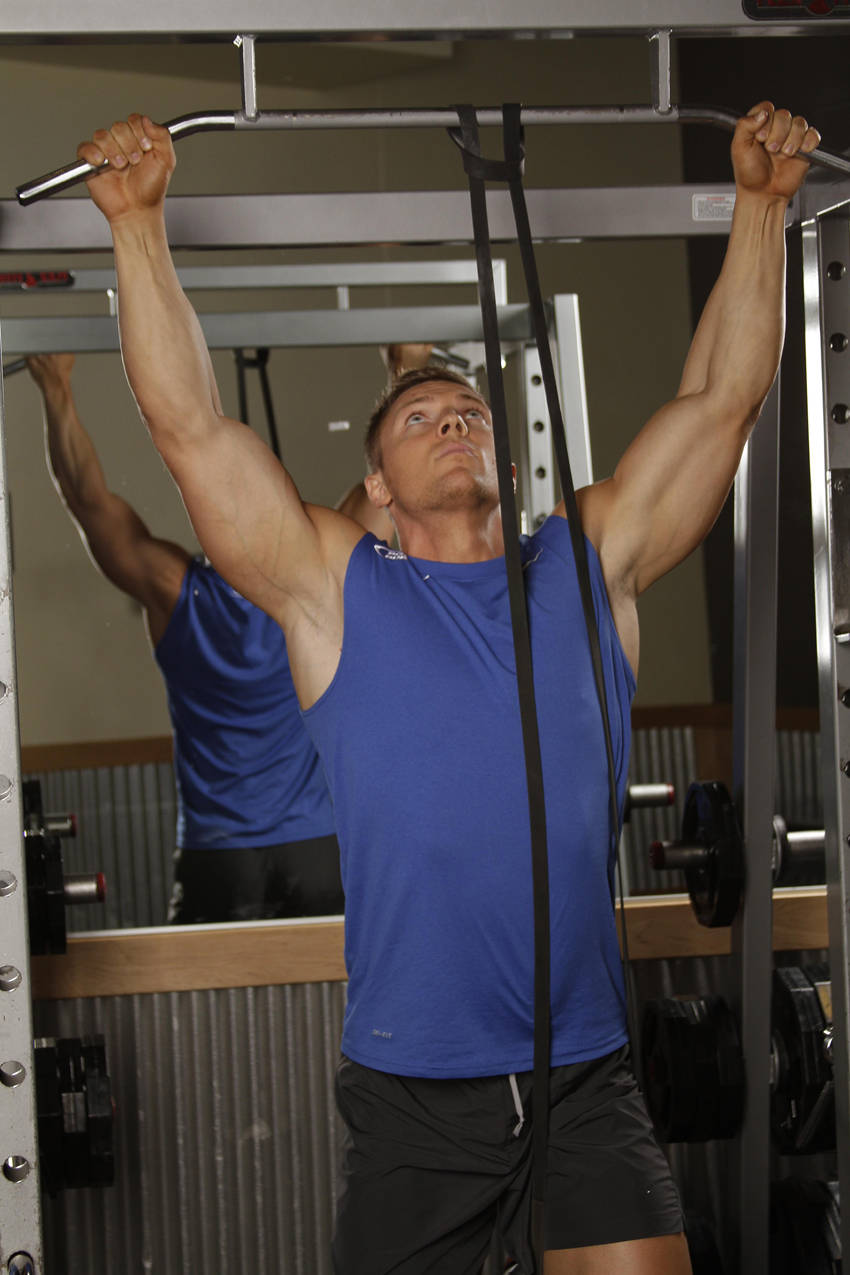
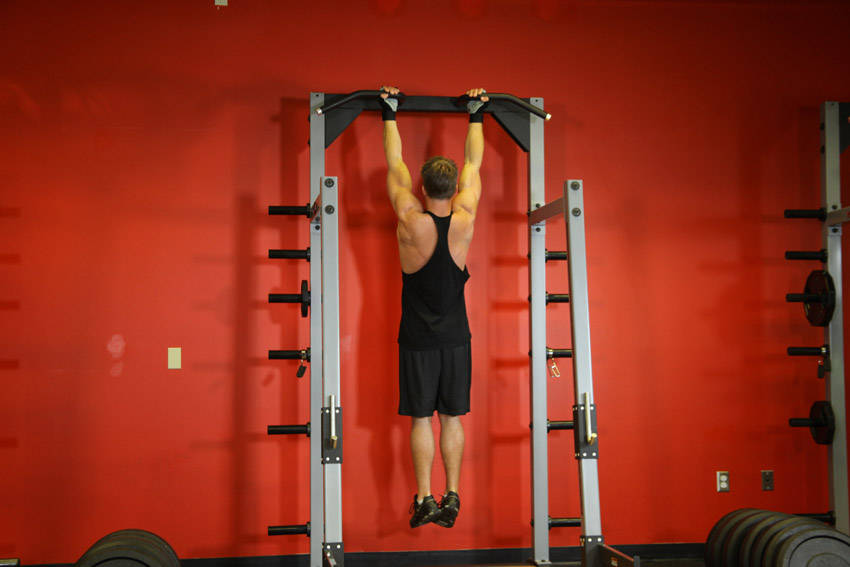
Exhale as you pull down or lift your body and inhale during the controlled return. Keep breathing instead of hanging on a prolonged breath hold.
Getting your next view ready…
The Straight-Arm Pulldown primarily works the lats. It is a strength movement performed with cable.
 1 / 2
1 / 2How to
Movement instructions
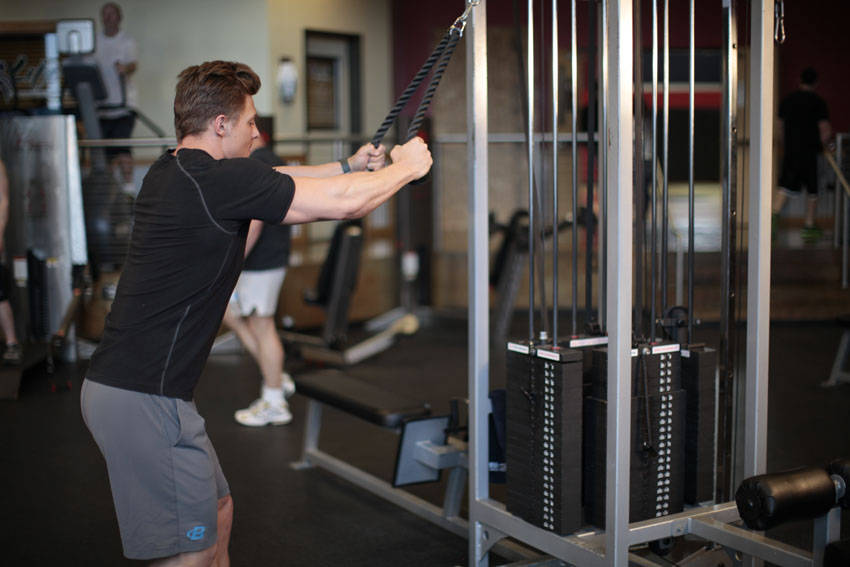
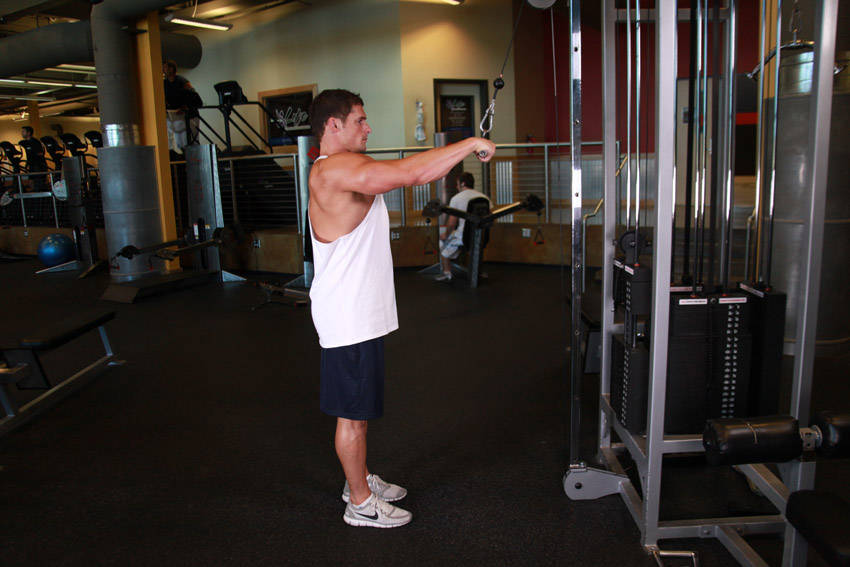
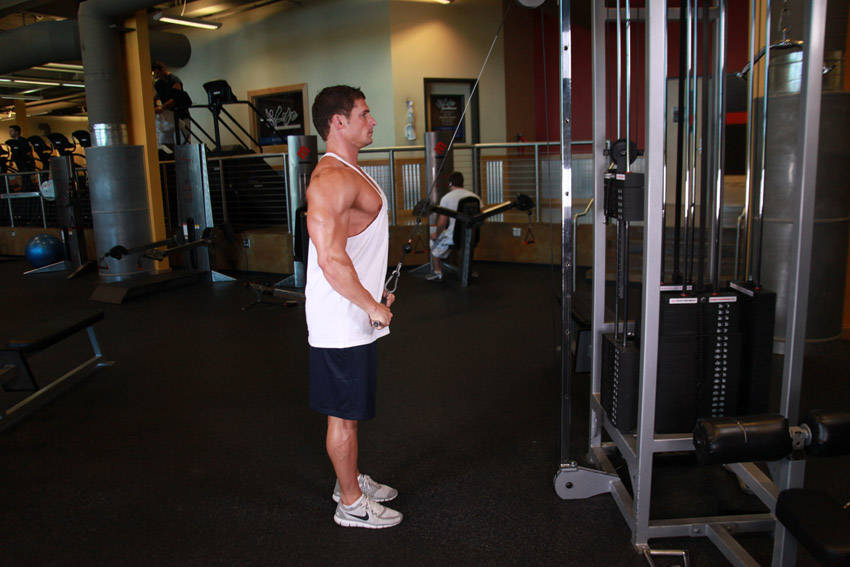
You will start by grabbing the wide bar from the top pulley of a pulldown machine and using a wider than shoulder-width pronated (palms down) grip. Step backwards two feet or so.
Bend your torso forward at the waist by around 30-degrees with your arms fully extended in front of you and a slight bend at the elbows. If your arms are not fully extended then you need to step a bit more backwards until they are. Once your arms are fully extended and your torso is slightly bent at the waist, tighten the lats and then you are ready to begin.
While keeping the arms straight, pull the bar down by contracting the lats until your hands are next to the side of the thighs. Breathe out as you perform this step.
While keeping the arms straight, go back to the starting position while breathing in.
Repeat for the recommended amount of repetitions.
Technique guidance
Exhale as you pull down or lift your body and inhale during the controlled return. Keep breathing instead of hanging on a prolonged breath hold.
General guidance based on the exercise and equipment. It is not personal coaching or medical advice.
Your progress
Keep the same cable setup, range of motion and recording method when comparing Straight-Arm Pulldown sessions.
Weight, repetitions and completed sets.
Example: 3 sets of 8 reps at 30 kg. Next time, record the actual result, even if it is the same.
Look for more repetitions at the same weight, or a heavier weight for comparable repetitions. Total weight lifted also changes when you add sets, so it is not a strength score.
Read the tracking guideThe examples show how to keep a record. They are not workout targets or a personalised training plan.
See how Jijibisha tracks your progressMuscles
Muscle guide
Lats is the primary muscle group. The lighter highlights show the supporting muscles involved in the movement.
In depth
The straight-arm pulldown is a cable exercise that trains the lats by moving the arms from in front of the body toward the thighs while the elbows remain only slightly bent. It is useful when you want to practice shoulder extension without turning the movement into a row.
Quick answer: Stand back from a high cable, hinge slightly, brace your torso, and keep a soft but steady bend in the elbows. Pull the attachment in an arc toward your thighs by driving the upper arms down, then return slowly until the lats reach a comfortable stretch.
The latissimus dorsi are the primary target. The teres major and other upper-back muscles assist, while the triceps help keep the elbows from bending and the abdomen keeps the torso stable.
The exercise is sometimes called a straight-arm cable pulldown, lat pushdown, or cable pullover. Equipment and terminology vary, but the defining feature is shoulder movement with very little change at the elbow.
Browse more lat exercises and other movements in the cable exercise library.
Think about moving the upper arms rather than moving the hands. The hands simply connect your arms to the cable.
If the elbows bend and straighten significantly, the triceps perform more of the work. Keep a soft elbow bend, but do not repeatedly change it during the repetition.
Standing up and leaning forward on every repetition uses body momentum. Reduce the resistance and keep the hinge angle consistent.
The lats have already completed most of their useful work when the hands reach the thighs. Forcing the attachment farther back can shift the movement toward the shoulders and encourage the ribs to flare.
A controlled stretch is useful, but allowing the shoulders to collapse toward the ears can make the position unstable. Reach forward and upward while keeping control around the shoulder blades.
An extremely wide grip can shorten the movement. Start around shoulder width and adjust the attachment or grip until the cable clears your body comfortably.
A straight bar gives both hands one stable path. A rope allows a neutral grip and can travel around the body more easily near the bottom. Individual handles allow each arm to move independently.
The attachment matters less than maintaining the exercise pattern: nearly fixed elbows, stable torso, and shoulder extension driven by the lats.
A conventional lat pulldown bends the elbows and uses the biceps and upper back alongside the lats. The straight-arm pulldown keeps the elbows comparatively fixed, which reduces the rowing component and isolates shoulder extension more clearly.
The movements complement each other. A lat pulldown can serve as a main vertical pull, while the straight-arm version works well as a lighter accessory or as practice for feeling the lats move the upper arm.
Both exercises move the upper arm through shoulder extension. The cable maintains a different resistance direction and is easy to adjust in small increments. The dumbbell pullover uses a bench and changes leverage as the weight moves over the body.
Choose the version you can position safely and repeat without discomfort. Neither exercise requires an extreme overhead range.
Two to four sets of approximately 10–20 repetitions is a practical range for many routines. Use a load that lets you keep the elbows and torso nearly fixed.
Increase the resistance only after you can complete the top of your target range without rocking, bending the elbows more, or shortening the return. Better control and a consistent stretch are also meaningful forms of progression.
The long head of the triceps assists with shoulder extension and helps maintain the elbow position, so some involvement is normal. Excessive triceps fatigue may mean you are repeatedly bending and straightening the elbows.
No. Keep a small, comfortable bend in the elbows. “Straight arm” means the elbow angle stays nearly fixed, not that the joints must be aggressively locked.
Use a modest hinge that creates cable clearance and a comfortable overhead stretch. A large bend is unnecessary and can encourage torso movement.
Yes. Begin with a light cable setting and learn to move the upper arms without changing the elbow angle. A coach or qualified trainer can help when the movement is difficult to feel or set up.
The straight-arm pulldown is a controlled lat exercise, not a heavy full-body cable swing. Hold the torso and elbow position steady, move the upper arms toward the thighs, and return through a comfortable stretch.
Add it to a back workout routine and track the cable setting and repetitions with Jijibisha.
Swap it
Different equipment, same muscle
These movements also target the lats using something else.
Related
Get the app
Add it to a routine, record every completed set, and keep the workout saved on your phone even when the gym has no reception.