Breathing
Exhale as the target muscle shortens against resistance and inhale during the controlled return. Keep breathing steadily throughout the set.
Getting your next view ready…
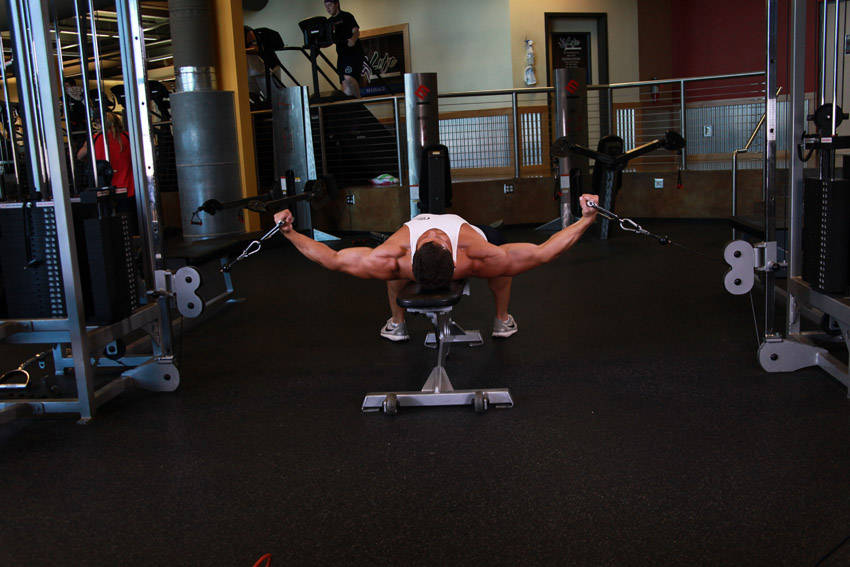
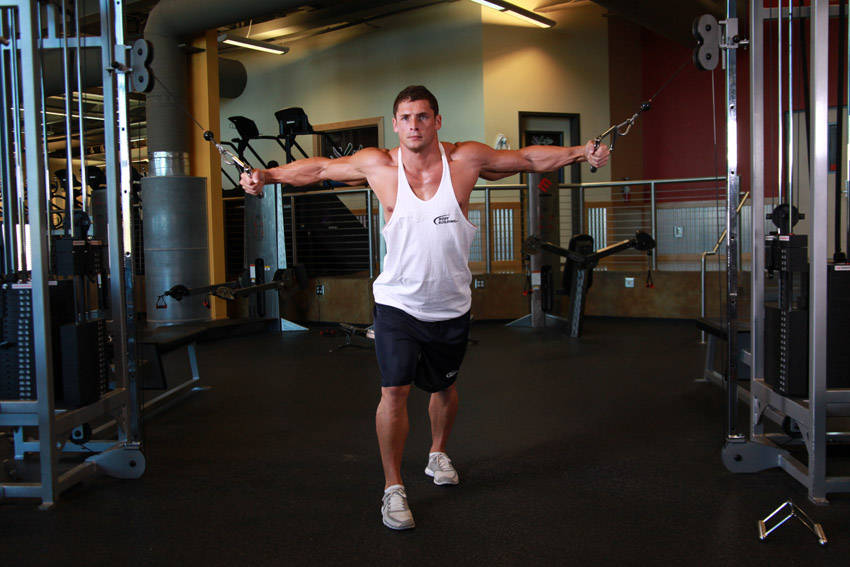
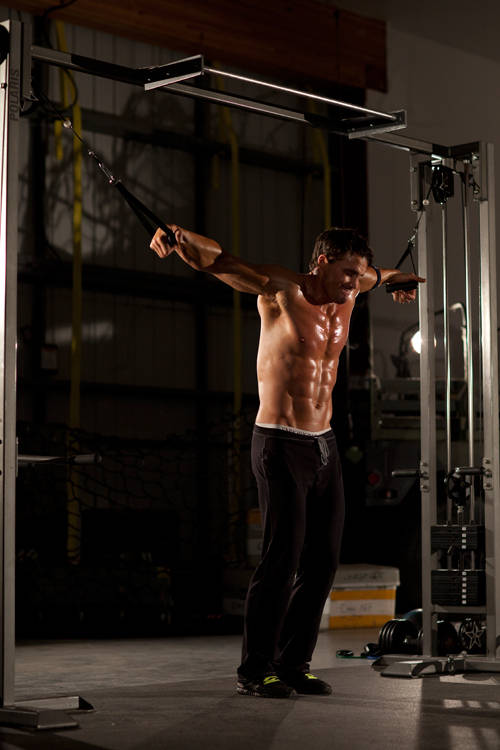
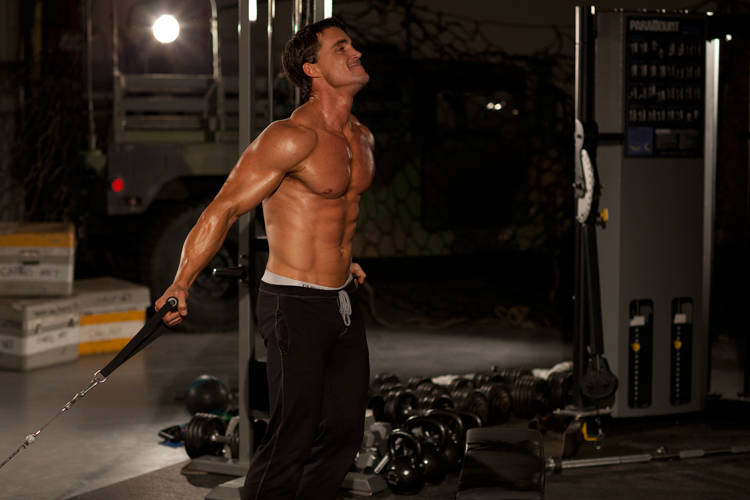
The Incline Cable Flye primarily works the chest, with the shoulders supporting the movement. It is a strength movement performed with cable.
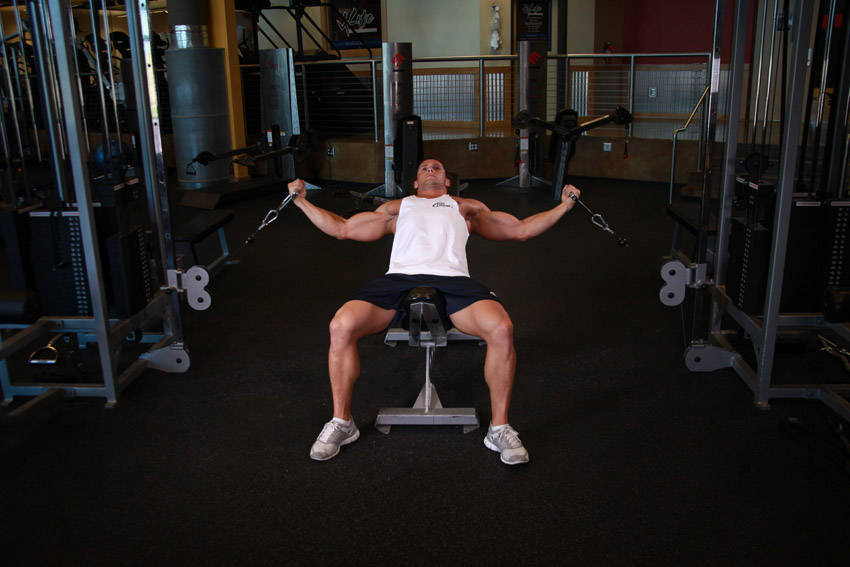
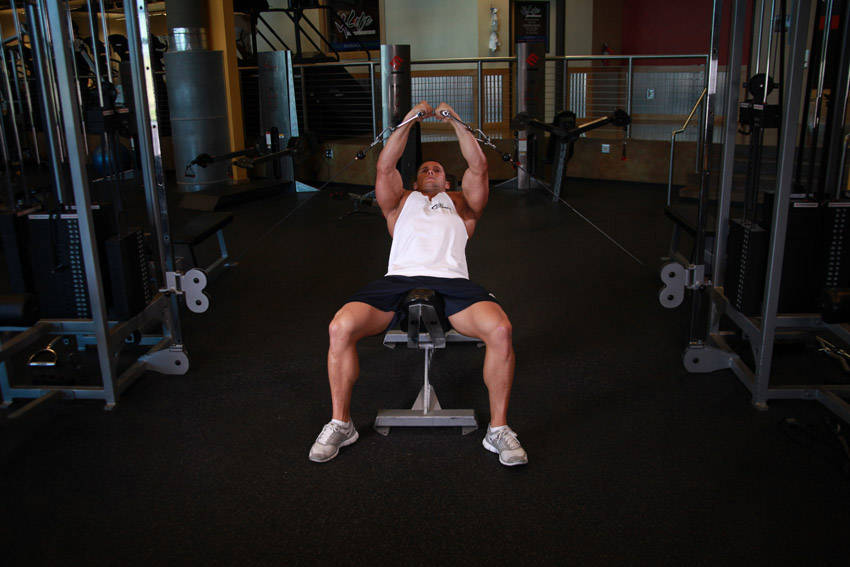 1 / 2
1 / 2How to
Movement instructions
To get yourself into the starting position, set the pulleys at the floor level (lowest level possible on the machine that is below your torso).
Place an incline bench (set at 45 degrees) in between the pulleys, select a weight on each one and grab a pulley on each hand.
With a handle on each hand, lie on the incline bench and bring your hands together at arms length in front of your face. This will be your starting position.
With a slight bend of your elbows (in order to prevent stress at the biceps tendon), lower your arms out at both sides in a wide arc until you feel a stretch on your chest. Breathe in as you perform this portion of the movement. Tip: Keep in mind that throughout the movement, the arms should remain stationary. The movement should only occur at the shoulder joint.
Return your arms back to the starting position as you squeeze your chest muscles and exhale. Hold the contracted position for a second. Tip: Make sure to use the same arc of motion used to lower the weights.
Repeat the movement for the prescribed amount of repetitions.
Technique guidance
Exhale as the target muscle shortens against resistance and inhale during the controlled return. Keep breathing steadily throughout the set.
General guidance based on the exercise and equipment. It is not personal coaching or medical advice.
Your progress
Keep the same cable setup, range of motion and recording method when comparing Incline Cable Flye sessions.
Weight, repetitions and completed sets.
Example: 3 sets of 8 reps at 30 kg. Next time, record the actual result, even if it is the same.
Look for more repetitions at the same weight, or a heavier weight for comparable repetitions. Total weight lifted also changes when you add sets, so it is not a strength score.
Read the tracking guideThe examples show how to keep a record. They are not workout targets or a personalised training plan.
See how Jijibisha tracks your progressMuscles
Muscle guide
Chest is the primary muscle group. The lighter highlights show the supporting muscles involved in the movement.
Swap it
Different equipment, same muscle
These movements also target the chest using something else.
Related
Related movements
Get the app
Add it to a routine, record every completed set, and keep the workout saved on your phone even when the gym has no reception.