Breathing
Exhale as the target muscle shortens against resistance and inhale during the controlled return. Keep breathing steadily throughout the set.
Getting your next view ready…
The Cable Rope Overhead Triceps Extension primarily works the triceps. It is a strength movement performed with cable.
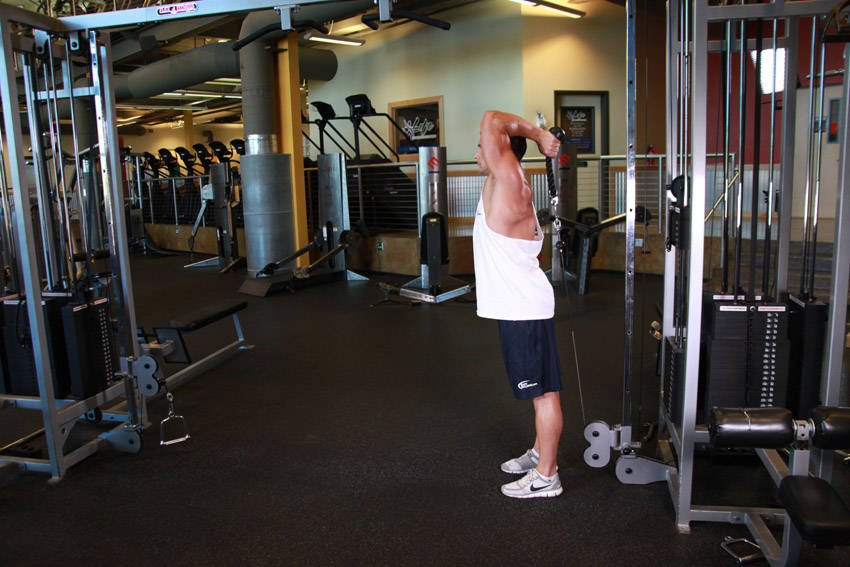
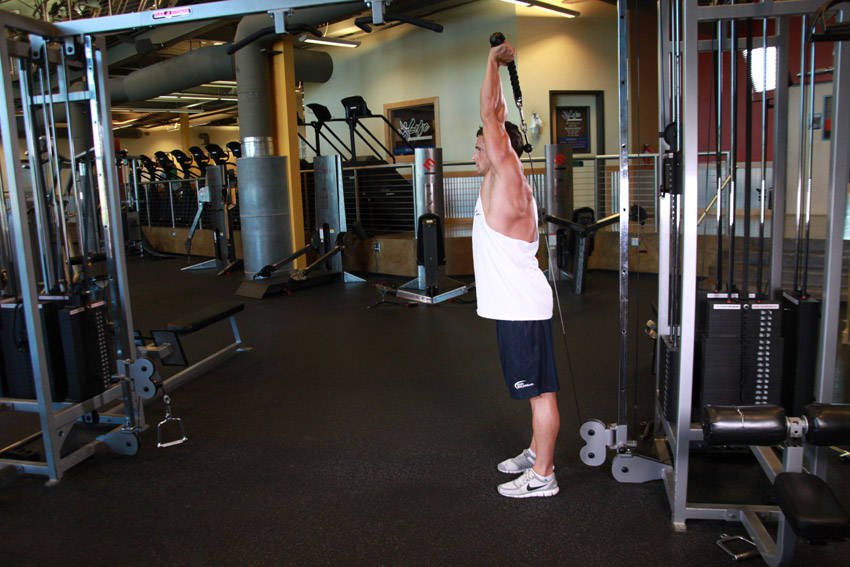 1 / 2
1 / 2How to
Movement instructions
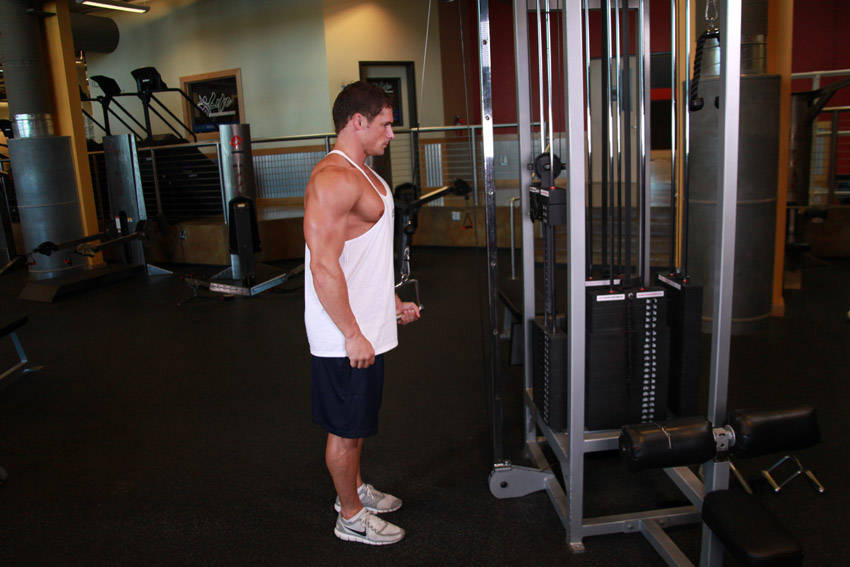
Attach a rope to the bottom pulley of the pulley machine.
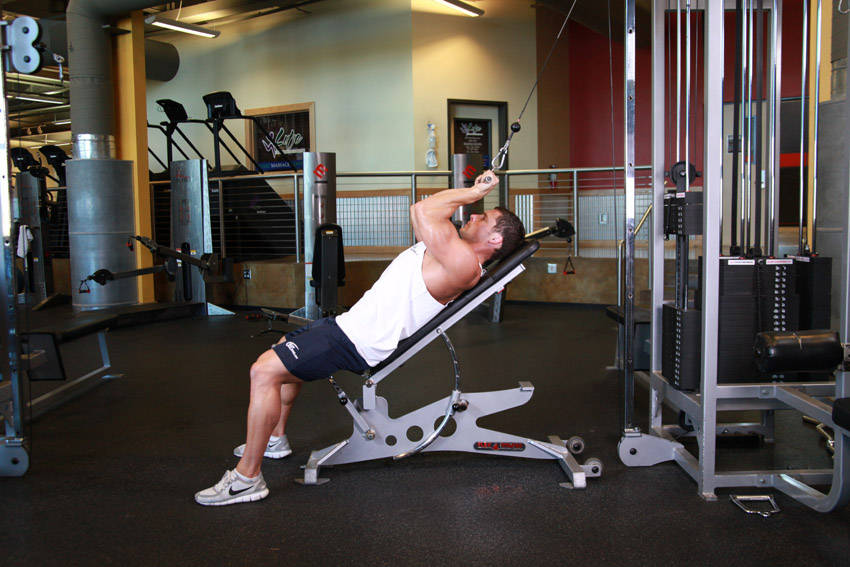
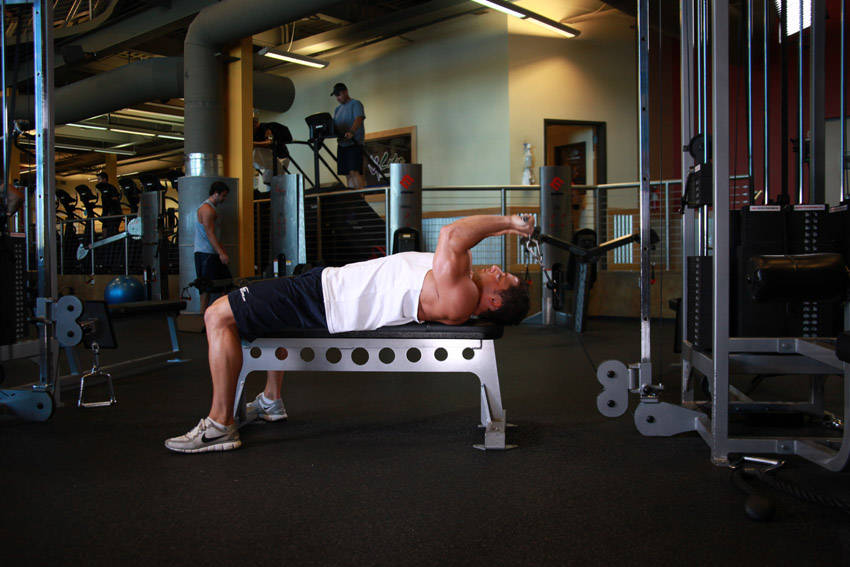
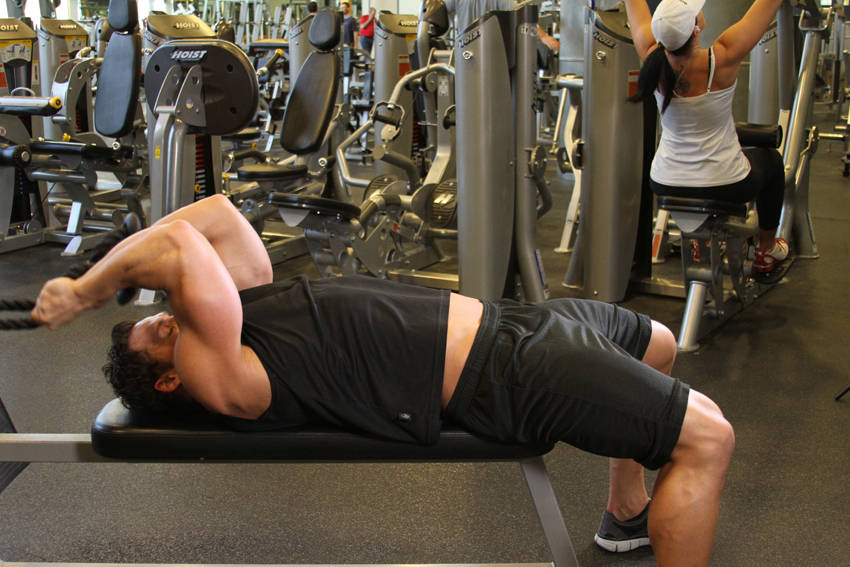
Grasping the rope with both hands, extend your arms with your hands directly above your head using a neutral grip (palms facing each other). Your elbows should be in close to your head and the arms should be perpendicular to the floor with the knuckles aimed at the ceiling. This will be your starting position.
Slowly lower the rope behind your head as you hold the upper arms stationary. Inhale as you perform this movement and pause when your triceps are fully stretched.
Return to the starting position by flexing your triceps as you breathe out.
Repeat for the recommended amount of repetitions.
Technique guidance
Exhale as the target muscle shortens against resistance and inhale during the controlled return. Keep breathing steadily throughout the set.
General guidance based on the exercise and equipment. It is not personal coaching or medical advice.
Your progress
Keep the same cable setup, range of motion and recording method when comparing Cable Rope Overhead Triceps Extension sessions.
Weight, repetitions and completed sets.
Example: 3 sets of 8 reps at 30 kg. Next time, record the actual result, even if it is the same.
Look for more repetitions at the same weight, or a heavier weight for comparable repetitions. Total weight lifted also changes when you add sets, so it is not a strength score.
Read the tracking guideThe examples show how to keep a record. They are not workout targets or a personalised training plan.
See how Jijibisha tracks your progressMuscles
Muscle guide
Triceps is the primary muscle group. The lighter highlights show the supporting muscles involved in the movement.
In depth
The cable rope overhead triceps extension trains elbow extension with the arms positioned overhead. This position places the long head of the triceps in a lengthened position, while the cable keeps resistance on the movement through a large part of the repetition.
Quick answer: Attach a rope to a low pulley, turn away from the machine, bring the hands behind or above the head, and keep the upper arms steady. Straighten the elbows until the arms are extended without forcing them backward, then return slowly to a comfortable stretch.
The triceps are the primary muscles. All three heads contribute to straightening the elbow, while the overhead arm position particularly challenges the long head because it crosses the shoulder joint.
The shoulders, upper back, abdomen, and lower body stabilize the position. They should keep you balanced rather than generating the repetition.
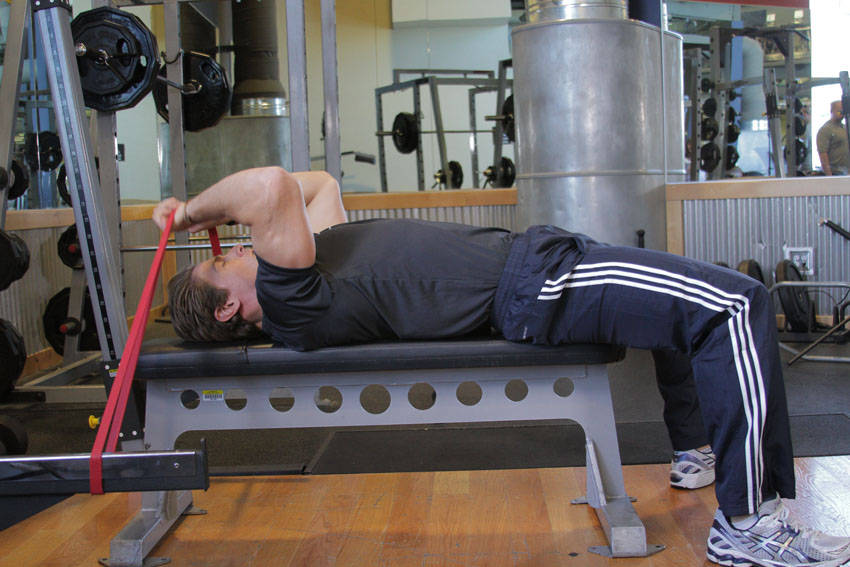
Explore more triceps exercises or browse the complete cable exercise library.
The cable should remain clear of your head and body throughout the movement. Reposition yourself before the set if the rope, clip, or cable rubs against you.
Rocking forward can move more weight but reduces the amount of work performed by the triceps. Use less resistance and keep the torso position consistent.
Some elbow movement is normal, but large changes often turn the exercise into a shoulder movement. Keep the upper arms generally steady without trying to squeeze the elbows into a painful position.
An exaggerated back arch can appear when the load is too heavy or shoulder mobility is limited. Brace gently, adjust your stance, and reduce the range if needed.
The stretched position is part of the exercise. Lower the rope until you reach a controlled, comfortable depth instead of immediately reversing near the top.
Straighten the elbows under control. Do not snap into the end position or use speed to finish the repetition.
The rope lets each hand find its own path and allows the hands to separate slightly at the top. A straight or angled bar fixes the hands in one position and may feel more stable.
Neither attachment is mandatory. Choose the one that allows a secure grip, comfortable elbow path, and repeatable range of motion.
Two to four working sets of roughly 8–20 repetitions is a practical starting point. Because this is usually an accessory exercise, the load should not force large torso movement.
Progress when you can complete every set at the top of your range while controlling both the extension and the return. Increase the stack by the smallest useful amount, or keep the same load and improve the repetition quality.
If your elbows or shoulders become irritated, stop and choose a comfortable alternative rather than forcing the overhead position.
The overhead position lengthens the long head of the triceps and requires more shoulder and torso control. You may need less weight than you use for a cable pushdown.
They should remain generally steady, but a small amount of natural movement is expected. The important point is that elbow extension—not swinging the shoulders or torso—produces most of the repetition.
Lower until you feel a controlled triceps stretch without shoulder or elbow pain. Your individual mobility and cable setup determine the useful depth.
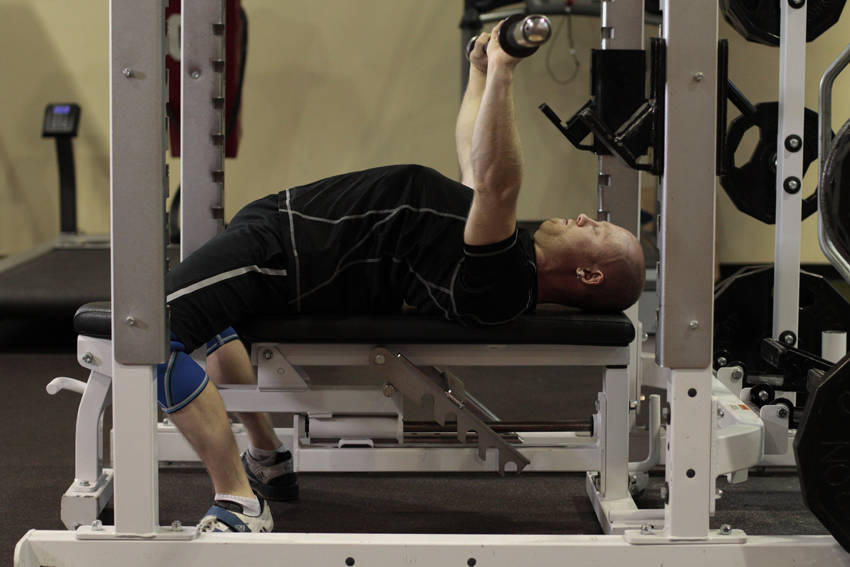
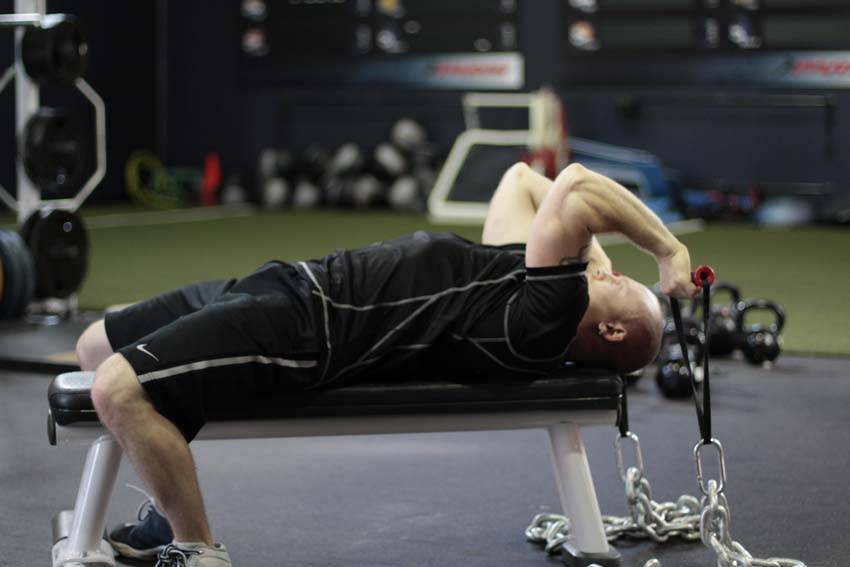
Alternatives include a single-arm cable overhead extension, dumbbell overhead extension, cable pushdown, or lying triceps extension. Use the variation that fits your equipment and joints.
The cable rope overhead triceps extension is most effective when the body stays quiet and the elbows do the work. Use a stable stance, a comfortable overhead position, and a load you can lower slowly.
Organize it with other triceps exercises in your workout routine, then record each set in the Jijibisha app.
Swap it
Different equipment, same muscle
These movements also target the triceps using something else.
Related
Get the app
Add it to a routine, record every completed set, and keep the workout saved on your phone even when the gym has no reception.