Breathing
Exhale as the target muscle shortens against resistance and inhale during the controlled return. Keep breathing steadily throughout the set.
Getting your next view ready…
The Hyperextensions (Back Extensions) primarily works the lower back, with the glutes and hamstrings supporting the movement. It is a strength movement performed with other.
 1 / 2
1 / 2How to
Movement instructions
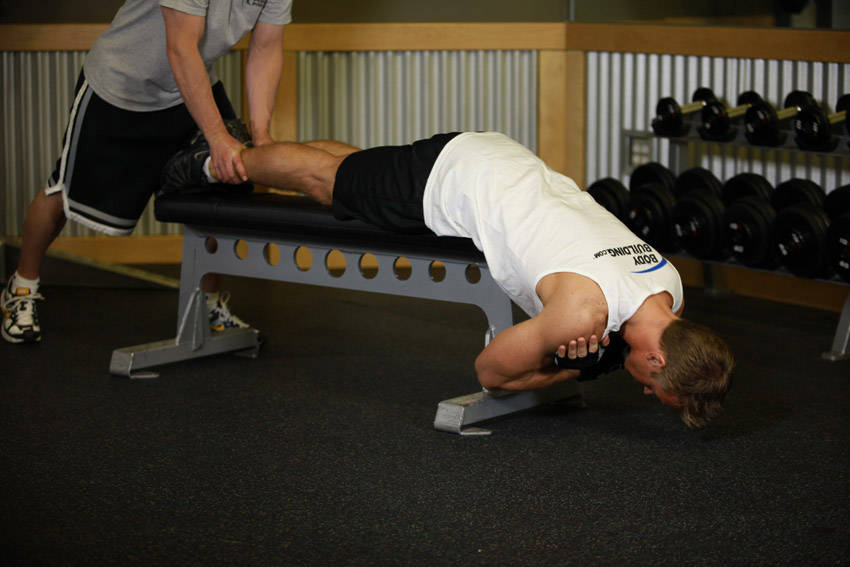
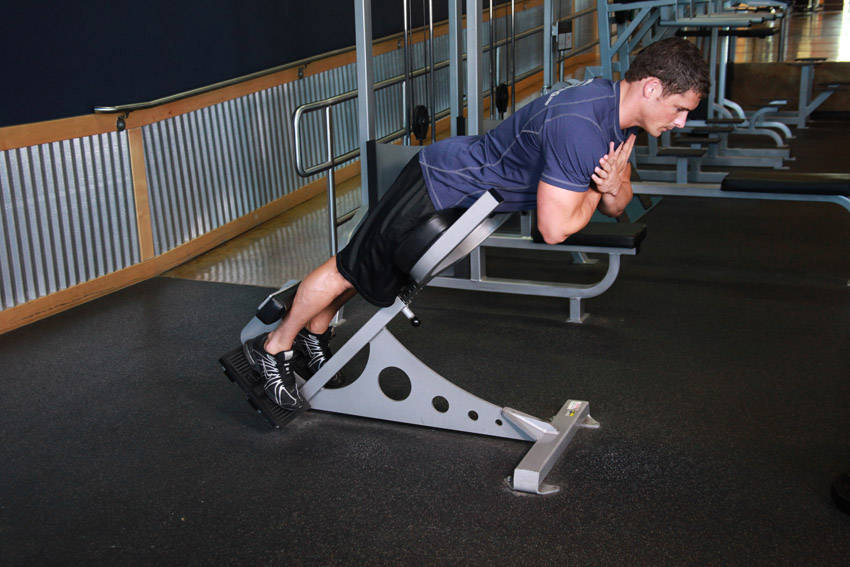
Lie face down on a hyperextension bench, tucking your ankles securely under the footpads.
Adjust the upper pad if possible so your upper thighs lie flat across the wide pad, leaving enough room for you to bend at the waist without any restriction.
With your body straight, cross your arms in front of you (my preference) or behind your head. This will be your starting position. Tip: You can also hold a weight plate for extra resistance in front of you under your crossed arms.
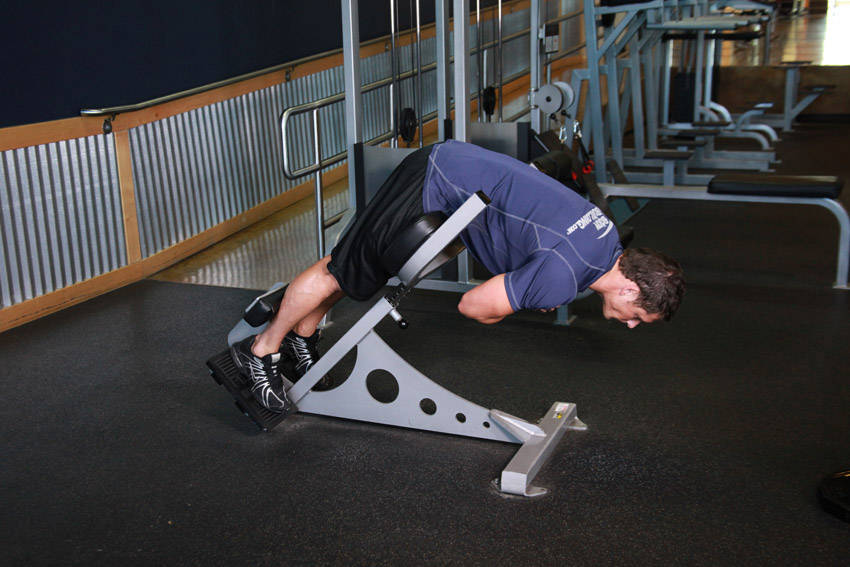
Start bending forward slowly at the waist as far as you can while keeping your back flat. Inhale as you perform this movement. Keep moving forward until you feel a nice stretch on the hamstrings and you can no longer keep going without a rounding of the back. Tip: Never round the back as you perform this exercise. Also, some people can go farther than others. The key thing is that you go as far as your body allows you to without rounding the back.
Slowly raise your torso back to the initial position as you inhale. Tip: Avoid the temptation to arch your back past a straight line. Also, do not swing the torso at any time in order to protect the back from injury.
Repeat for the recommended amount of repetitions.
Technique guidance
Exhale as the target muscle shortens against resistance and inhale during the controlled return. Keep breathing steadily throughout the set.
General guidance based on the exercise and equipment. It is not personal coaching or medical advice.
Your progress
Keep the same other setup, range of motion and recording method when comparing Hyperextensions (Back Extensions) sessions.
Weight, repetitions and completed sets.
Example: 3 sets of 8 reps at 30 kg. Next time, record the actual result, even if it is the same.
Look for more repetitions at the same weight, or a heavier weight for comparable repetitions. Total weight lifted also changes when you add sets, so it is not a strength score.
Read the tracking guideThe examples show how to keep a record. They are not workout targets or a personalised training plan.
See how Jijibisha tracks your progressMuscles
Muscle guide
Lower Back is the primary muscle group. The lighter highlights show the supporting muscles involved in the movement.
Swap it
Different equipment, same muscle
These movements also target the lower back using something else.
Related
Related movements
Get the app
Add it to a routine, record every completed set, and keep the workout saved on your phone even when the gym has no reception.