Breathing
Inhale during the controlled lowering phase and exhale as you press away. Avoid holding your breath unintentionally.
Getting your next view ready…
The Incline Dumbbell Press primarily works the chest, with the shoulders and triceps supporting the movement. It is a strength movement performed with dumbbell.
 1 / 2
1 / 2How to
Movement instructions
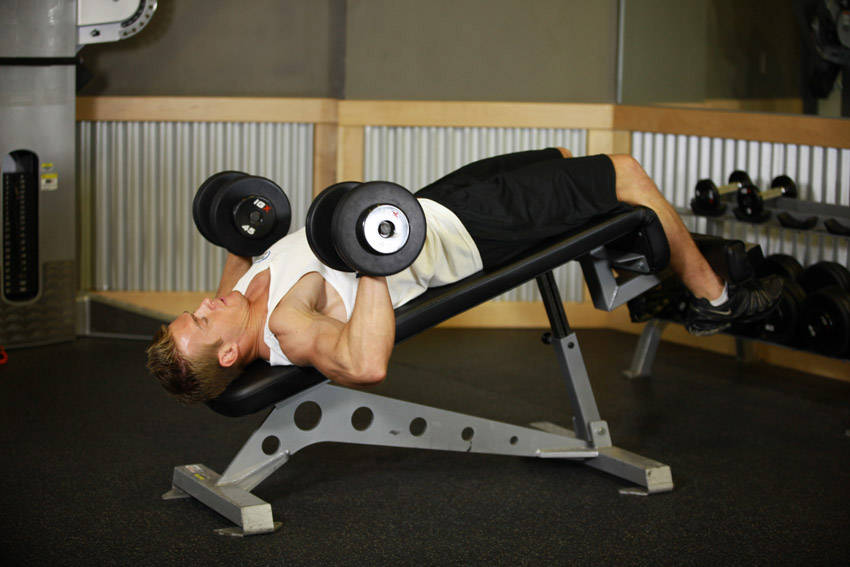
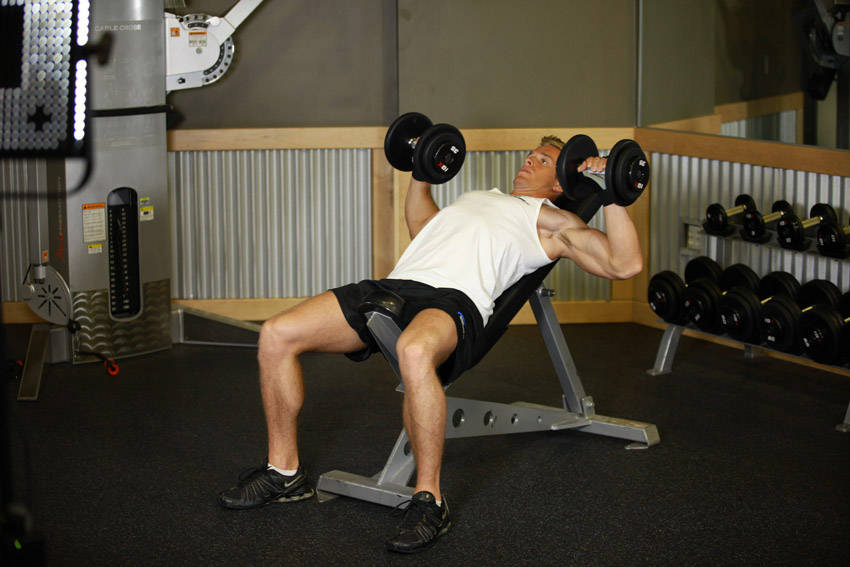
Lie back on an incline bench with a dumbbell in each hand atop your thighs. The palms of your hands will be facing each other.
Then, using your thighs to help push the dumbbells up, lift the dumbbells one at a time so that you can hold them at shoulder width.
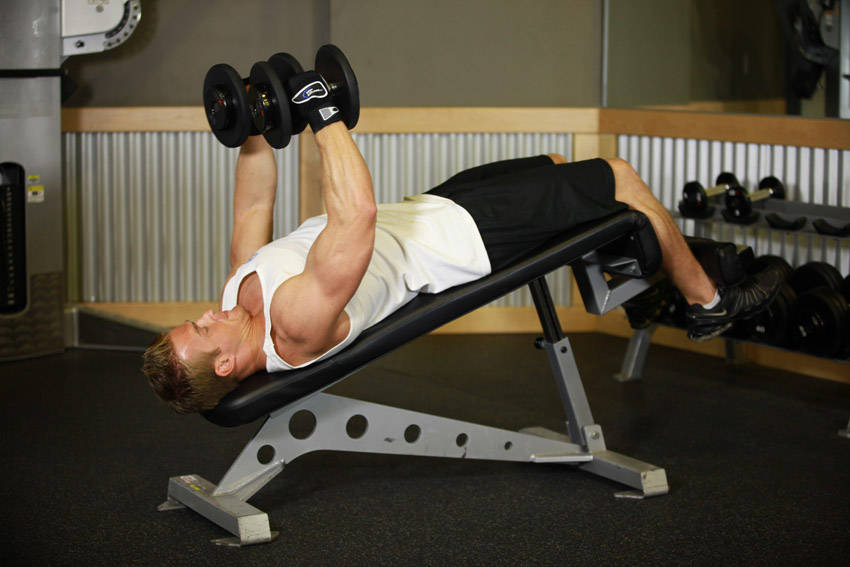
Once you have the dumbbells raised to shoulder width, rotate your wrists forward so that the palms of your hands are facing away from you. This will be your starting position.
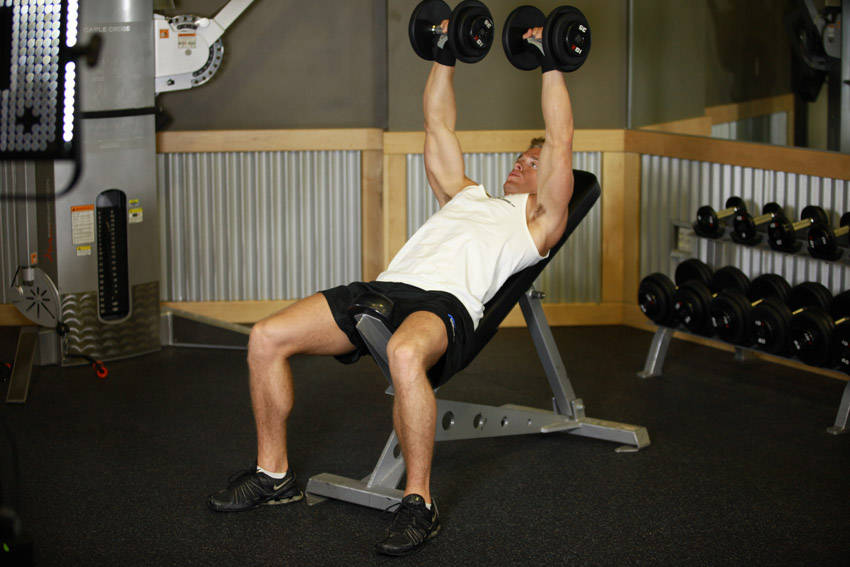
Be sure to keep full control of the dumbbells at all times. Then breathe out and push the dumbbells up with your chest.
Lock your arms at the top, hold for a second, and then start slowly lowering the weight. Tip Ideally, lowering the weights should take about twice as long as raising them.
Repeat the movement for the prescribed amount of repetitions.
When you are done, place the dumbbells back on your thighs and then on the floor. This is the safest manner to release the dumbbells.
Technique guidance
Inhale during the controlled lowering phase and exhale as you press away. Avoid holding your breath unintentionally.
General guidance based on the exercise and equipment. It is not personal coaching or medical advice.
Your progress
Keep the same dumbbell setup, range of motion and recording method when comparing Incline Dumbbell Press sessions.
Weight, repetitions and completed sets.
Example: 3 sets of 8 reps at 30 kg. Next time, record the actual result, even if it is the same.
Look for more repetitions at the same weight, or a heavier weight for comparable repetitions. Total weight lifted also changes when you add sets, so it is not a strength score.
Read the tracking guideThe examples show how to keep a record. They are not workout targets or a personalised training plan.
See how Jijibisha tracks your progressMuscles
Muscle guide
Chest is the primary muscle group. The lighter highlights show the supporting muscles involved in the movement.
In depth
The incline dumbbell press is a compound chest exercise performed on an angled bench. Compared with a flat dumbbell press, the incline position generally shifts more work toward the upper portion of the chest and the front of the shoulders while the triceps assist with elbow extension.
Quick answer: Set the bench to a low or moderate incline, bring the dumbbells to shoulder level, plant your feet, and press the weights up over the upper chest. Keep the wrists over the forearms, lower under control, and use an angle that does not turn the exercise into an overhead shoulder press.
The primary target is the chest, with emphasis often felt in the upper chest because of the inclined torso position. The front deltoids and triceps assist, while the upper back and trunk stabilize the shoulders and bench position.
Bench angle changes the balance of the exercise. A modest incline retains more chest involvement; a steep incline usually increases shoulder contribution. Individual structure and technique also affect where the movement is felt.
Explore more chest exercises or compare movements in the dumbbell exercise library.
The dumbbells do not have to touch at the top. Finish each repetition with stable arms rather than colliding the weights or forcing extra range.
A high bench angle can make the exercise resemble a seated shoulder press. If upper-chest training is the goal, start with a modest incline and adjust based on comfort and control.
Keep the handles over the forearms. A wrist that repeatedly folds backward makes the dumbbells harder to control and can limit pressing strength.
The elbows do not need to be pinned to the torso, but forcing them into a straight line with the shoulders can be uncomfortable. Let them travel on a natural diagonal under the weights.
Use a depth you can pause or reverse without losing shoulder position. Momentum at the bottom makes the repetition less repeatable and can turn a manageable load into an unstable one.
Getting heavy dumbbells into and out of position can be harder than pressing them. Use a spotter when appropriate, keep the floor clear, and avoid twisting while dropping a dumbbell to one side.
There is no single required angle. A low incline, often around 15-30 degrees, keeps the movement close to a chest press. Angles around 30-45 degrees are also common but may involve the shoulders more. Steeper settings increasingly resemble an overhead press.
Bench markings differ, so record the notch or setting you actually use. Choose an angle that lets you keep the shoulders comfortable, the forearms under the weights, and the same pressing path across sessions.
Dumbbells let each arm move independently and allow the hands to rotate toward a neutral grip. They also require more control when getting into position. A barbell provides one connected implement and may make heavier loading or smaller plate increases easier.
Neither variation is universally better. Dumbbells suit lifters who value independent arm movement and grip freedom. Barbells suit lifters who prefer a fixed hand position and simpler heavy progression.
Two to four working sets of roughly 6-15 repetitions is a useful range for many strength and muscle-building routines. Begin with a pair you can lift into position safely and lower with control.
Progress by adding repetitions within a chosen range before moving to the next dumbbell pair. You can also improve by using a more consistent depth, matching both arms, or reducing unnecessary torso movement.
Record the bench angle, weight per dumbbell, and repetitions in your workout tracker. Consistent setup makes the numbers meaningful.
It trains the whole chest while the incline position generally increases the contribution of the upper chest and front shoulders. It does not isolate one small section of the chest.
A low or moderate incline is a practical starting point. Choose the setting that feels stable and allows a controlled chest press without shoulder discomfort.
Lower until you reach a comfortable stretch and can keep the wrists and elbows aligned. The dumbbells do not need to touch the chest, and forcing extra depth is not required.
Yes. Turning the palms partly or fully toward each other may feel more comfortable for some lifters. Use the grip that supports a stable wrist and repeatable path.
The incline dumbbell press is most effective when the bench angle matches your goal, the wrists remain stacked, and the weights are controlled from setup to finish. Use a manageable pair, repeat the same range, and progress in small recorded steps.
Build it into a custom routine and track every set with Jijibisha on Android, iPhone, or iPad.
Swap it
Different equipment, same muscle
These movements also target the chest using something else.
Related
Get the app
Add it to a routine, record every completed set, and keep the workout saved on your phone even when the gym has no reception.