Breathing
Breathe slowly and evenly. Exhale as you ease into a comfortable range, and never use the breath to force a deeper position.
Getting your next view ready…
The Posterior Tibialis Stretch primarily works the calves. It is a stretching movement performed with other.
 1 / 2
1 / 2How to
Movement instructions
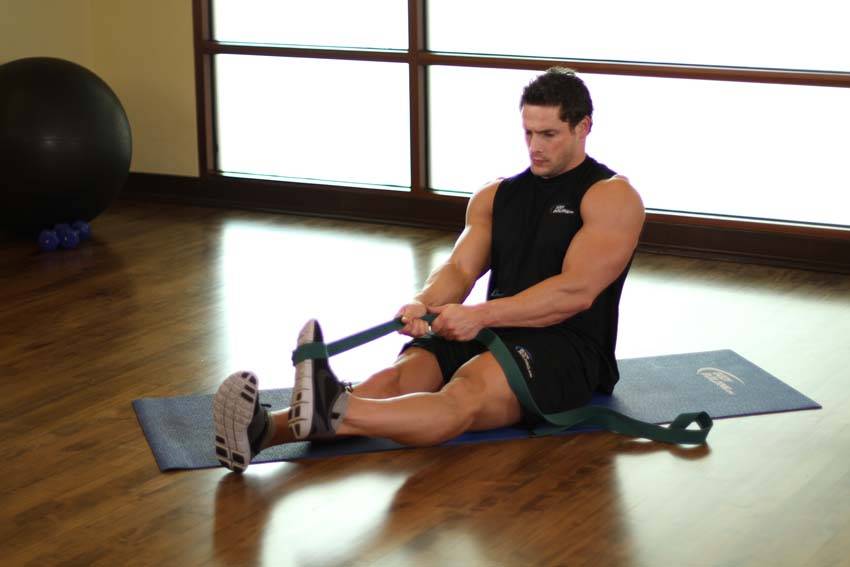
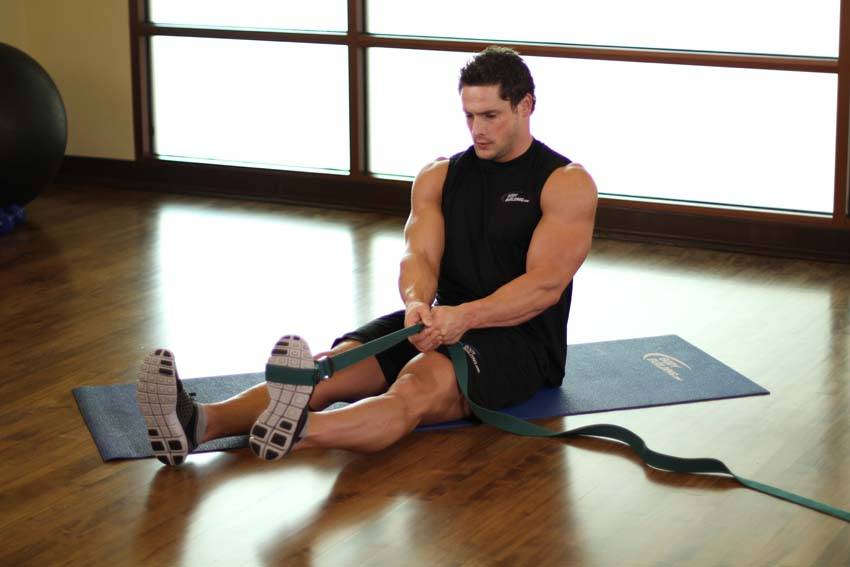
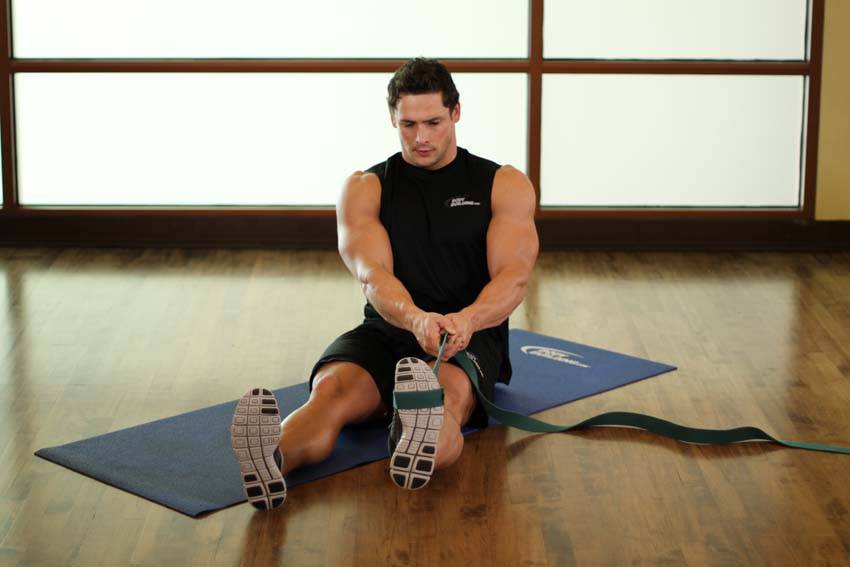
In a seated position, loop a belt, rope, or band around one foot. This will be your starting position.
With the leg extended and the heel off of the ground, pull on the belt so that the foot is everted, with the outside of the foot being pulled towards you. Hold for 10-20 seconds, and then switch sides.
Technique guidance
Breathe slowly and evenly. Exhale as you ease into a comfortable range, and never use the breath to force a deeper position.
General guidance based on the exercise and equipment. It is not personal coaching or medical advice.
Your progress
Keep the same other setup, range of motion and recording method when comparing Posterior Tibialis Stretch sessions.
Duration and completed sets.
Example: a 30-second set, followed by a 25-second set. Record the time you completed, not the target.
Review duration alongside your notes about the variation and control. Longer is a recorded result, not an instruction to extend every set.
Read the tracking guideThe examples show how to keep a record. They are not workout targets or a personalised training plan.
See how Jijibisha tracks your progressMuscles
Muscle guide
Calves is the primary muscle group. The lighter highlights show the supporting muscles involved in the movement.
Swap it
Different equipment, same muscle
These movements also target the calves using something else.
Related
Related movements
Get the app
Add it to a routine, record every completed set, and keep the workout saved on your phone even when the gym has no reception.