Breathing
Inhale at the bottom or as you lower yourself. Exhale as you pull yourself up.
Getting your next view ready…
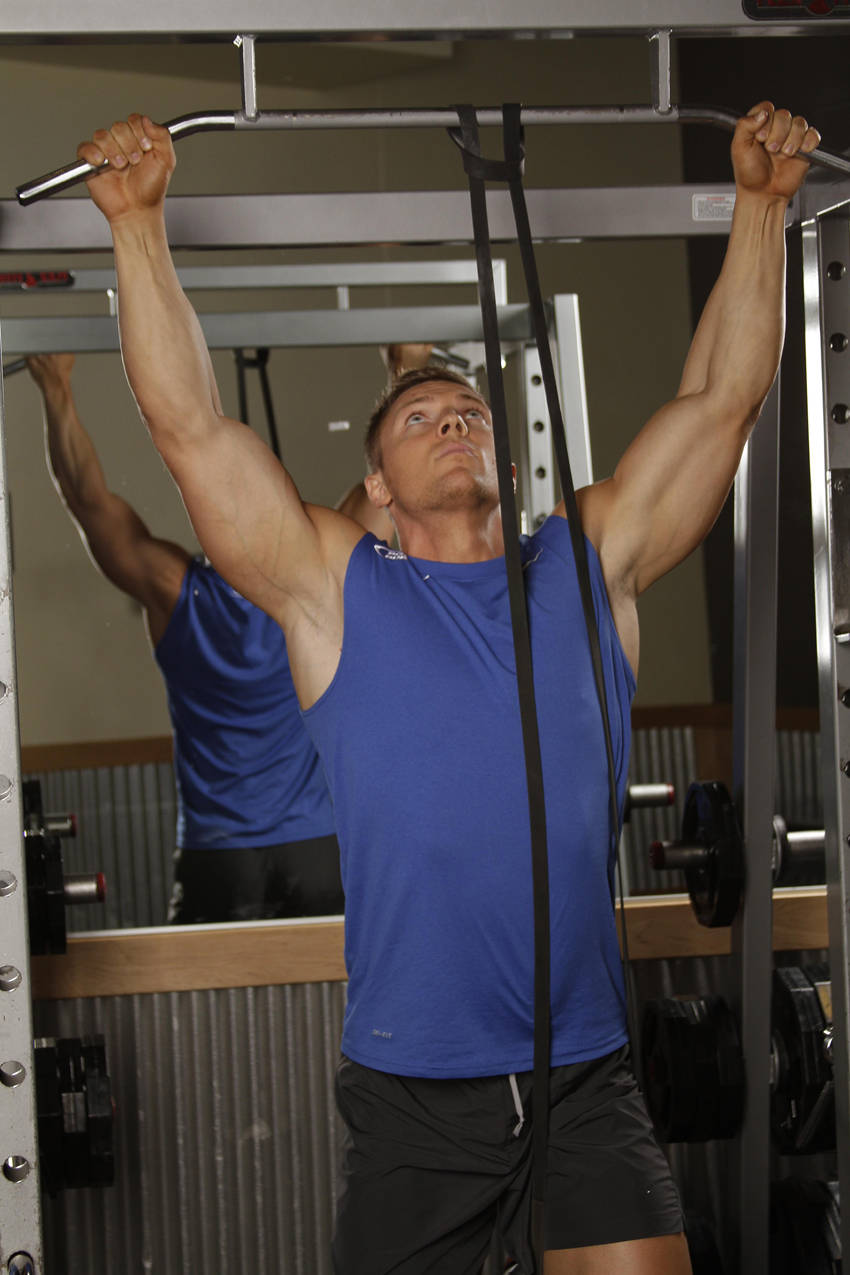
The Pull-Up primarily works the lats, with the biceps and middle back supporting the movement. It is a strength movement that needs no equipment.
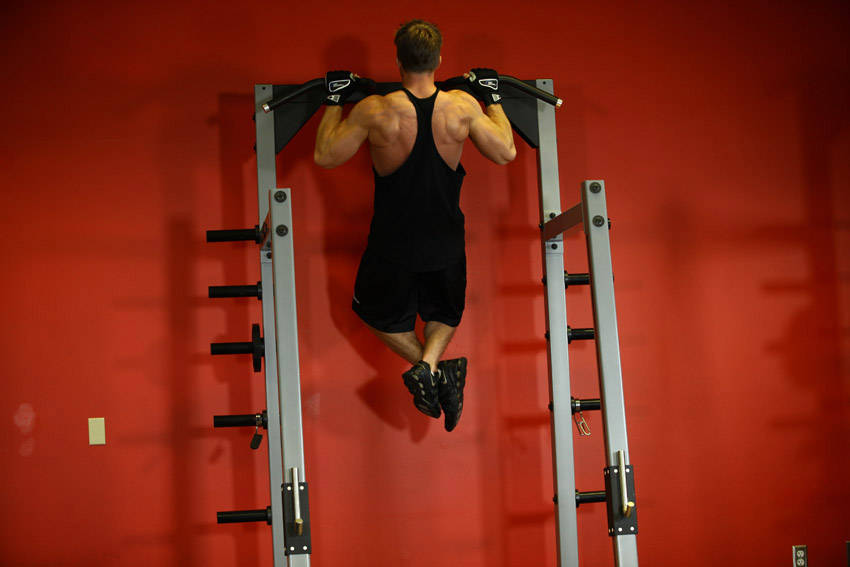 1 / 2
1 / 2How to
Movement instructions
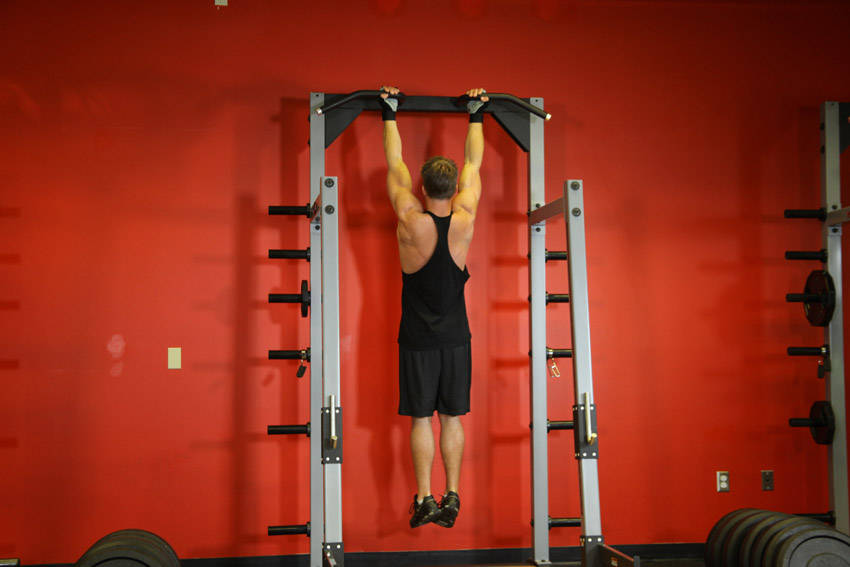
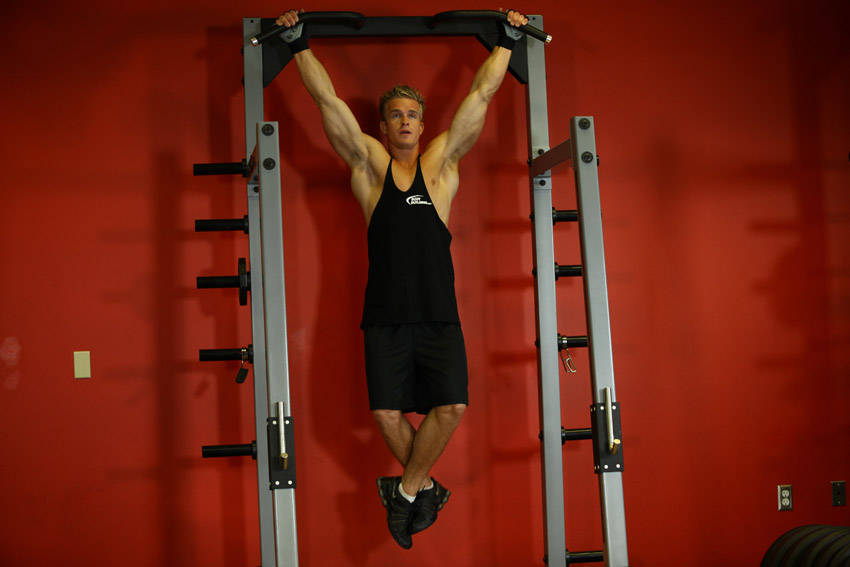
Grab the pull-up bar with the palms facing forward using the prescribed grip. Note on grips: For a wide grip, your hands need to be spaced out at a distance wider than your shoulder width. For a medium grip, your hands need to be spaced out at a distance equal to your shoulder width and for a close grip at a distance smaller than your shoulder width.
As you have both arms extended in front of you holding the bar at the chosen grip width, bring your torso back around 30 degrees or so while creating a curvature on your lower back and sticking your chest out. This is your starting position.
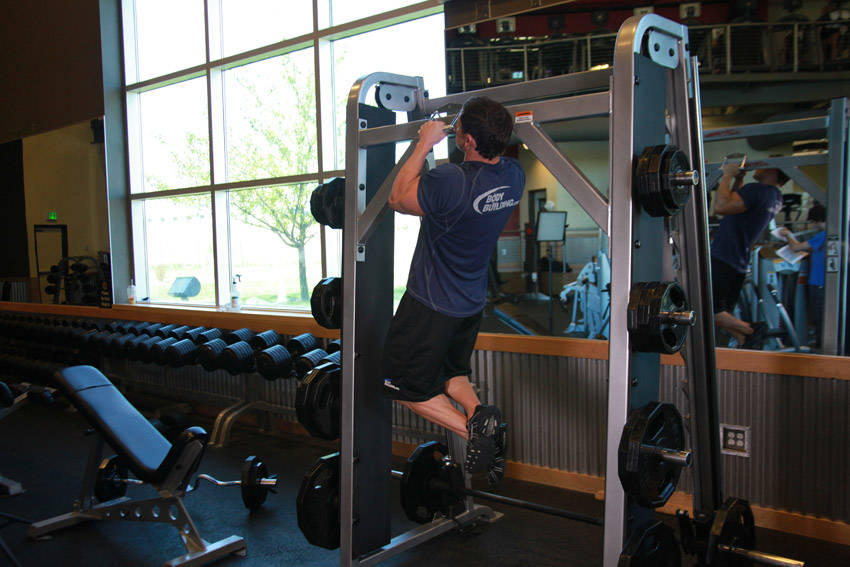
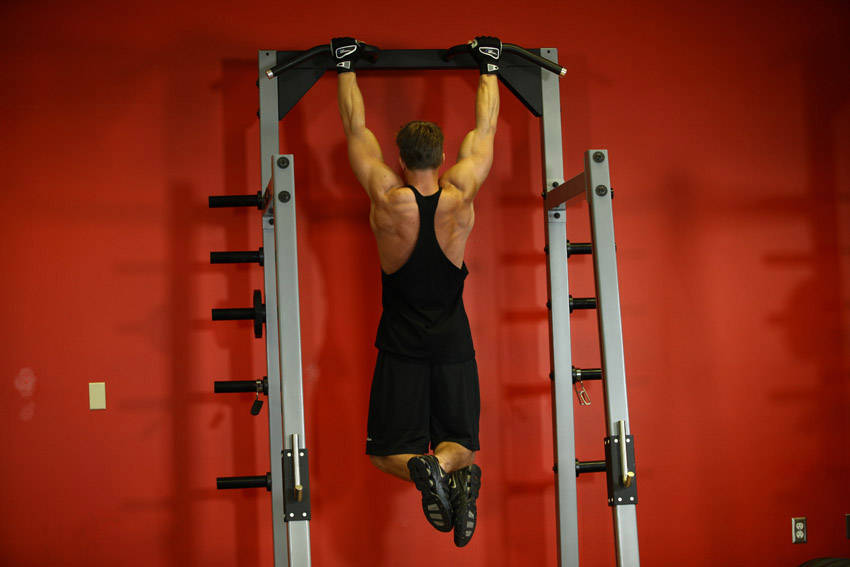
Pull your torso up until the bar touches your upper chest by drawing the shoulders and the upper arms down and back. Exhale as you perform this portion of the movement. Tip: Concentrate on squeezing the back muscles once you reach the full contracted position. The upper torso should remain stationary as it moves through space and only the arms should move. The forearms should do no other work other than hold the bar.
After a second on the contracted position, start to inhale and slowly lower your torso back to the starting position when your arms are fully extended and the lats are fully stretched.
Repeat this motion for the prescribed amount of repetitions.
Technique guidance
Inhale at the bottom or as you lower yourself. Exhale as you pull yourself up.
Curated exercise guidance. Review your setup and adapt it to your current ability.
Your progress
Keep the same exercise variation, range of motion and recording method when comparing Pull-Up sessions.
Repetitions and completed sets.
Example: 10, 9 and 8 completed reps. Keep each set separate instead of recording only the total.
Compare repetitions using the same variation and range. A different variation needs its own history; extra reps are not directly comparable if the movement changes.
Read the tracking guideThe examples show how to keep a record. They are not workout targets or a personalised training plan.
See how Jijibisha tracks your progressMuscles
Muscle guide
Lats is the primary muscle group. The lighter highlights show the supporting muscles involved in the movement.
Swap it
Different equipment, same muscle
These movements also target the lats using something else.
Related
Related movements
Get the app
Add it to a routine, record every completed set, and keep the workout saved on your phone even when the gym has no reception.