Breathing
Breathe slowly and evenly. Exhale as you ease into a comfortable range, and never use the breath to force a deeper position.
Getting your next view ready…
The Adductor primarily works the adductors. It is a stretching movement performed with foam roll.
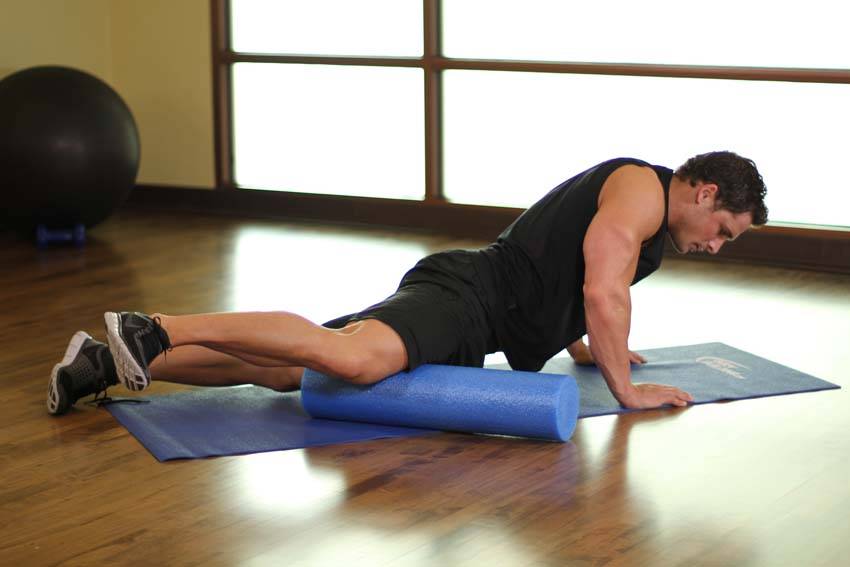 1 / 2
1 / 2How to
Movement instructions
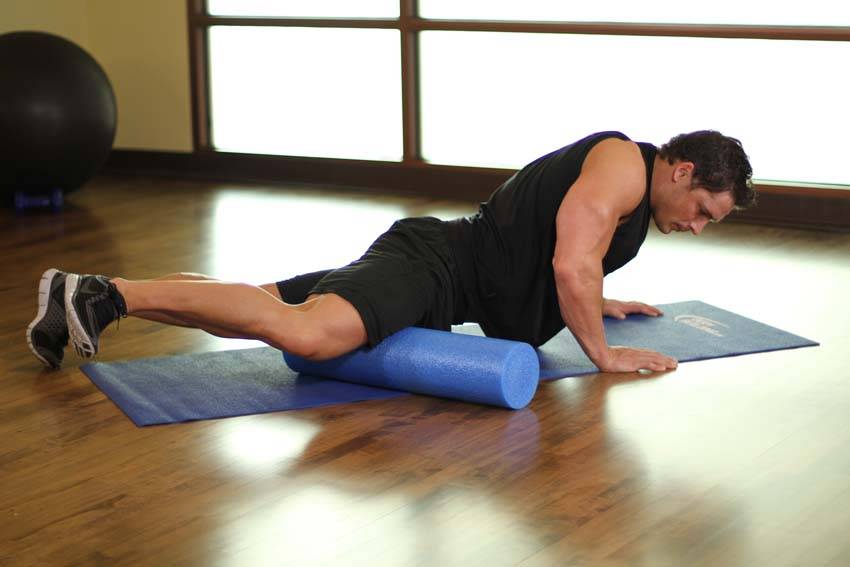
Lie face down with one leg on a foam roll.
Rotate the leg so that the foam roll contacts against your inner thigh. Shift as much weight onto the foam roll as can be tolerated.
While trying to relax the muscles if the inner thigh, roll over the foam between your hip and knee, holding points of tension for 10-30 seconds. Repeat with the other leg.
Technique guidance
Breathe slowly and evenly. Exhale as you ease into a comfortable range, and never use the breath to force a deeper position.
General guidance based on the exercise and equipment. It is not personal coaching or medical advice.
Your progress
Keep the same foam roll setup, range of motion and recording method when comparing Adductor sessions.
Duration and completed sets.
Example: a 30-second set, followed by a 25-second set. Record the time you completed, not the target.
Review duration alongside your notes about the variation and control. Longer is a recorded result, not an instruction to extend every set.
Read the tracking guideThe examples show how to keep a record. They are not workout targets or a personalised training plan.
See how Jijibisha tracks your progressMuscles
Muscle guide
Adductors is the primary muscle group. The lighter highlights show the supporting muscles involved in the movement.
In depth
The adductor foam roll is a self-massage and mobility exercise that targets the muscles along the inside of the thigh. It is commonly used before lower-body training, after exercise, or during a separate mobility session to reduce the feeling of inner-thigh tightness and make hip movement feel more comfortable.
Although the movement looks simple, positioning matters. The inner thigh can be sensitive, and placing too much body weight on the roller often makes the exercise unnecessarily painful. The goal is not to tolerate the most pressure possible. The goal is to apply manageable pressure while slowly exploring the muscles between the inside of the knee and the upper inner thigh.
When performed with control, the adductor foam roll can be a useful addition to warm-ups for squats, lunges, running, field sports, and other activities that require the hips to move freely.
The adductor foam roll is a self-myofascial rolling exercise performed with a foam roller placed underneath the inner thigh.
You begin in a face-down or partially face-down position with one leg bent and opened to the side. The foam roller sits underneath that leg. By shifting your body slowly, you move the roller along the inner thigh and pause over areas that feel unusually tense or sensitive.
This exercise is sometimes described using several different names:
These names generally refer to the same basic technique.
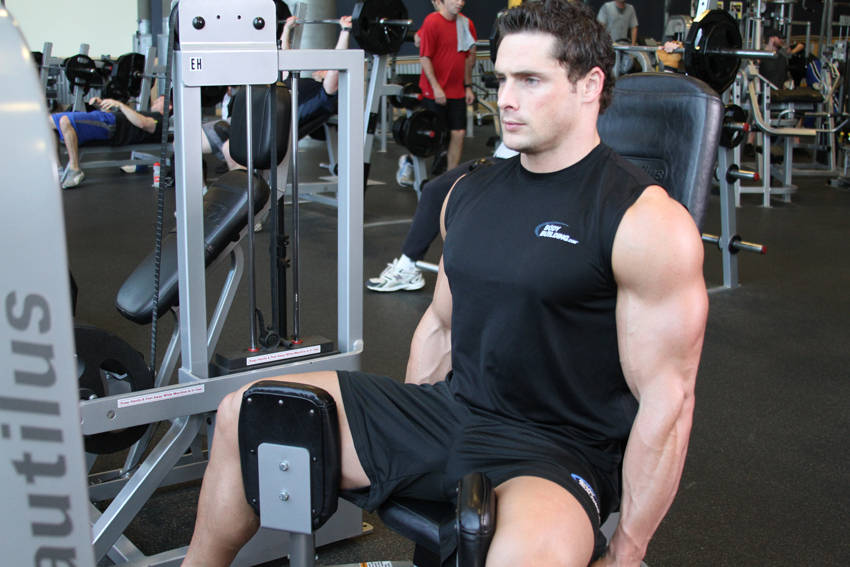
The movement is not the same as the seated hip adduction machine. The machine is a resistance exercise used to strengthen the inner thighs by bringing the legs together. The adductor foam roll is a mobility and recovery drill that applies external pressure to the muscles.
| Detail | Information |
|---|---|
| Primary muscles | Adductors and inner-thigh muscles |
| Exercise type | Mobility and self-massage |
| Equipment | Foam roller |
| Difficulty | Intermediate |
| Force | Static pressure and controlled rolling |
| Recommended duration | 30 to 90 seconds per side |
| Best used | Before training, after training, or during mobility work |
| Main goal | Reduce the feeling of tightness and improve movement comfort |
The adductors are a group of muscles located along the inside of the thigh. Their most familiar role is bringing the leg toward the centerline of the body, a movement called hip adduction.
The main muscles in this area include:
The adductor longus runs from the pelvis to the middle portion of the thigh bone. It contributes to hip adduction and assists with controlling the position of the leg during walking, running, and changes of direction.
It is one of the more accessible adductor muscles during foam rolling and may feel sensitive after wide-stance exercises or lateral movement.
The adductor brevis sits underneath the adductor longus. It assists with bringing the thigh inward and contributes to control around the hip.
Because it is located deeper than the adductor longus, you cannot isolate it precisely with a foam roller. Pressure applied to the inner thigh affects the surrounding tissues collectively.
The adductor magnus is the largest muscle in the adductor group. It extends across a substantial portion of the inner and back thigh.
Different sections of the adductor magnus assist with hip adduction, hip flexion, and hip extension. This is one reason the adductors can work hard during deep squats, deadlifts, lunges, and other compound lower-body exercises.
The gracilis is a long, relatively thin muscle that runs from the pelvis to the inside of the lower leg. It crosses both the hip and knee joints.
It assists with hip adduction and also contributes to bending and rotating the knee.
The pectineus is a smaller muscle located near the upper inner thigh. It assists with adduction and flexion of the hip.
The upper adductor region can be particularly sensitive, so pressure near the groin should always be introduced carefully.
The inner-thigh muscles do more than squeeze the legs together. They help control the hips and pelvis during many everyday and athletic movements.
The adductors contribute to:
The adductors may work especially hard during sumo deadlifts, wide-stance squats, lateral lunges, skating movements, sprinting, football, martial arts, and court sports.
Their involvement is not always obvious because they often work alongside the glutes, quadriceps, hamstrings, and other hip muscles.
Foam rolling is not a replacement for strength training, medical treatment, or a complete mobility program. However, it can be a practical tool when used for the right purpose.
The most immediate benefit is often a temporary reduction in the sensation of tightness.
After sitting for a long period, completing a demanding leg workout, or performing repeated lateral movements, the inner thighs may feel stiff. Controlled foam rolling can make the area feel more relaxed before you begin moving through a larger range of motion.
The result is usually temporary, which is not necessarily a problem. A temporary improvement may be enough to help you perform your warm-up exercises more comfortably.
Foam rolling may help increase short-term flexibility or range of motion without requiring a long static stretch.
This can be useful before exercises that require the knees and hips to move outward, including:
Foam rolling should still be followed by active movement. After rolling the adductors, perform bodyweight squats, lateral lunges, hip rotations, or another dynamic exercise that uses the available range.
The adductor foam roll can be included early in a warm-up when the inner thighs feel restricted.
A simple sequence might include:
The foam roller creates an opportunity to move more comfortably. The exercises that follow teach you to control that movement.
Some people find foam rolling useful after demanding lower-body training or on the day following a workout.
It may reduce the perception of soreness and make light movement feel easier. However, foam rolling does not instantly repair muscle tissue or eliminate the need for sleep, nutrition, hydration, and appropriate training volume.
Use it as one part of recovery rather than treating it as a complete recovery solution.
Rolling one leg at a time makes it easier to notice whether one side feels more sensitive or restricted than the other.
A small difference between sides is common. The goal is not to force both legs to feel identical in one session. Use similar durations on both sides and apply only as much pressure as each side can tolerate.
Follow these steps to foam roll the adductors safely and effectively.
Place a foam roller horizontally on the floor.
Use a clear area where the roller cannot slide into furniture or equipment. A gym mat can make the position more comfortable, but the floor should not be so soft that the roller becomes unstable.
Lie face down and support your upper body with your forearms or hands.
Keep one leg extended behind you. Bend the other knee and bring that leg out to the side.
The bent leg should resemble the position used during a frog stretch, but it does not need to open as far.
Position the roller underneath the inner thigh of the bent leg.
Begin closer to the knee rather than immediately placing the roller near the groin. The lower portion of the inner thigh is often easier to tolerate while you become familiar with the movement.
Keep the roller on soft muscle tissue. Avoid placing direct pressure on the knee joint, pelvis, or other bony areas.
Use your forearms, hands, opposite leg, and torso to control how much body weight rests on the roller.
Start with light pressure. You can gradually shift more weight onto the roller if the sensation remains manageable.
You should feel pressure, tenderness, or mild discomfort. You should not feel sharp pain, burning, numbness, tingling, or pain inside the hip or knee joint.
Move your body gradually so the roller travels along the inner thigh.
Use short passes rather than quickly rolling from the knee to the groin. Move only a few centimetres at a time and notice how each area feels.
Keep the movement slow enough that you remain in control.
When you find a sensitive point, stop and maintain gentle pressure for approximately 10 to 30 seconds.
Continue breathing and allow the leg to relax. If the discomfort increases rather than settles, reduce the pressure or move away from that position.
A tender area does not need to be attacked aggressively. More pain does not mean better results.
Continue moving along the inner thigh, stopping before reaching the groin itself.
You can slightly rotate the thigh to explore nearby sections of the adductor muscles. Make only small adjustments and avoid forcing the hip into an uncomfortable angle.
After approximately 30 to 90 seconds, change legs and repeat the process.
Use a similar amount of time on both sides, but adjust the pressure according to how each leg feels.
Keep these cues in mind while performing the exercise:
Pressure should be uncomfortable enough that you notice the area, but mild enough that you can breathe normally and keep the leg relaxed.
A useful guideline is approximately 4 to 6 out of 10 on a discomfort scale.
At this level:
If the discomfort reaches 8 or 9 out of 10, the pressure is probably excessive. You are more likely to tense the muscle, rush through the movement, or irritate the area.
A softer foam roller is often better for beginners. A firm or textured roller creates more concentrated pressure and may be unnecessarily intense for the inner thigh.
Fast rolling makes it difficult to control pressure or identify sensitive areas.
Slow down and use short passes. The exercise should feel deliberate rather than rushed.
Placing your full weight on the roller can make the inner thigh tighten in response.
Support more of your body with your arms and opposite leg. Gradually increase pressure only when the muscle begins to relax.
The roller should remain on the muscular portion of the inner thigh.
Avoid rolling over the inside of the knee. Direct pressure on a joint or bony area is unnecessary and may be uncomfortable.
The upper inner thigh contains sensitive structures that should not be compressed aggressively.
Stop before the roller reaches the groin. If you are unsure whether the position is appropriate, stay on the middle portion of the inner thigh.
Holding your breath usually increases tension throughout the body.
Breathe slowly and evenly. Exhaling while settling into a position can make it easier to reduce unnecessary muscular tension.
Foam rolling does not need to be extremely painful to be useful.
Severe discomfort may cause you to tighten the muscle, alter your position, or irritate already sensitive tissue. Use pressure you can control.
Foam rolling is not an appropriate way to diagnose or treat a suspected groin strain.
Do not roll directly over an area with sharp pain, swelling, bruising, sudden weakness, or pain that began during a specific movement. Seek assessment from a qualified healthcare professional when an injury may be present.
Temporary relief does not correct every cause of recurring tightness.
If the adductors regularly feel restricted, your program may also need:
Mobility work is most useful when combined with strength and movement practice.
Most people only need 30 to 90 seconds per leg.
Beginners can start with:
A more complete mobility session may use:
Longer sessions are not automatically better. If the tissue becomes increasingly sore or irritated, stop rather than continuing to accumulate time.
Consistency matters more than turning one session into an endurance test.
The adductors can be foam rolled several times per week when the pressure is moderate and the area responds well.
Common options include:
Daily foam rolling may be acceptable for some people when sessions are brief and gentle. However, you do not need to foam roll every day to make the exercise useful.
Reduce the frequency if the inner thigh becomes bruised, increasingly tender, or uncomfortable during normal movement.
The exercise can be used at either time, but the purpose changes.
Before a workout, use shorter and lighter rolling.
Aim for approximately 30 to 60 seconds per side, followed by dynamic movements such as:
The purpose is to make movement feel easier, not to completely relax the legs.
After training, you can use slower rolling and slightly longer pauses if it feels comfortable.
A post-workout session might include:
Avoid aggressive rolling when the muscles are already highly fatigued or painful.
On a recovery day, combine foam rolling with easy movement.
For example:
Recovery work should leave you feeling better than when you started.
Tight or sensitive adductors can make a wide or deep squat feel uncomfortable. Foam rolling may make the hips feel temporarily freer, but it should not be the only part of your squat preparation.
Try this warm-up:
During the squat, keep your feet stable and allow the knees to track in the same general direction as the toes.
Do not force a wider stance or deeper position simply because you foam rolled first.
Running, sprinting, kicking, skating, and changing direction all require the adductors to help control the leg and pelvis.
Athletes may use the adductor foam roll when the inner thighs feel stiff after:
Foam rolling should not replace sport-specific preparation. Follow it with running drills, lateral steps, gradual accelerations, or other movements that prepare the body for the demands of the session.
If groin discomfort appears during sprinting, kicking, or changing direction, do not assume the area only needs more foam rolling. Persistent or activity-related pain should be evaluated properly.
Foam rolling and stretching can both be used for mobility, but they are different techniques.
Foam rolling applies pressure to the muscle while the hip remains in a relatively stable position. Stretching lengthens the muscles by moving the legs farther apart.
Some people find foam rolling easier to tolerate before stretching because the leg does not need to move immediately into a large range.
A practical sequence is:
You can also try the groin and back stretch as part of a broader mobility routine.
Neither technique should involve bouncing, forced range, or sharp pain.
Foam rolling can change how the area feels, but it does not provide the same training stimulus as resistance exercise.
To develop stronger inner thighs, include movements that require the adductors to produce or resist force.
Options include:
Mobility and strength should support each other.
If you improve your available range but never strengthen it, you may struggle to control the new position. If you only strengthen a limited range, certain movements may continue to feel restricted.
The standard face-down position requires upper-body support and a reasonable amount of hip mobility. Beginners can reduce the difficulty by changing the setup.
Try these adjustments:
A smooth roller is usually easier to control than a deeply textured roller.
Progression does not need to involve making the exercise increasingly painful.
Better progression options include:
Once the standard variation feels manageable, pause on a mildly sensitive point and slowly bend and straighten the knee through a small range. The movement should remain smooth and pain-free.
A standard foam roller is convenient, but other tools can be used carefully.
Possible alternatives include:
A small, hard ball creates concentrated pressure and can be too aggressive for the upper inner thigh. Start with a larger and softer tool whenever possible.
Avoid using unstable household objects that may crack, collapse, or roll unexpectedly.
Do not perform the exercise directly over an area with:
People with medical conditions affecting circulation, bleeding, sensation, or tissue healing should seek professional guidance before using strong self-massage pressure.
Foam rolling should not be used to push through unexplained groin pain.
The exercise primarily targets the muscles along the inside of the thigh, including the adductor longus, adductor brevis, adductor magnus, gracilis, and pectineus.
It is better described as a self-massage or self-myofascial rolling exercise. It may make movement feel less restricted, but it does not place the adductors in the same lengthened position as a traditional inner-thigh stretch.
Start with approximately 30 seconds per side. You can gradually increase to 60 or 90 seconds when the pressure remains comfortable.
The inner thigh may be sensitive because of recent training, unfamiliar pressure, excessive body weight on the roller, or irritation in the area. Reduce the pressure and move more slowly. Stop if the sensation is sharp, burning, electrical, or located inside a joint.
Do not roll directly over a suspected groin strain without professional guidance. Acute injuries may involve pain, bruising, swelling, or weakness and require appropriate assessment and recovery.
It may temporarily make hip movement feel more comfortable, which can help some people access a deeper squat. Squat depth also depends on ankle mobility, hip structure, stance, technique, strength, and control.
Brief, gentle sessions may be suitable for some people. Daily rolling is unnecessary if the area already feels comfortable. Reduce the frequency if tenderness or bruising develops.
A soft or medium-density roller is usually the better starting point. The inner thigh can be sensitive, and a very hard roller may create more pressure than necessary.
No. Foam rolling is a mobility and self-massage technique. The adductor machine is a strength exercise that uses resistance while you bring your legs together.
The term “muscle knot” is commonly used to describe a sensitive or tense area, but foam rolling does not literally break apart muscle tissue. It may temporarily change the sensation of tightness, discomfort, and movement.
Follow the exercise with active movement. Good options include bodyweight squats, lateral lunges, hip rotations, adductor stretches, or a light set of your planned lower-body exercise.
The adductor foam roll is a simple way to apply controlled pressure to the inner-thigh muscles before training, after exercise, or during a mobility session.
The exercise works best when the pressure is moderate, the movement is slow, and the leg remains relaxed. Avoid rolling directly over the knee, pelvis, or groin, and do not treat severe pain as a sign that the exercise is working.
Use foam rolling to create a short-term opportunity for better movement. Then reinforce that movement with dynamic warm-up exercises, controlled strength training, and gradual progression.
For more lower-body mobility and strengthening options, explore the Jijibisha exercise library and combine the adductor foam roll with exercises that train the hips through different positions and movement patterns.
Swap it
Different equipment, same muscle
These movements also target the adductors using something else.
Related
Related movements
Get the app
Add it to a routine, record every completed set, and keep the workout saved on your phone even when the gym has no reception.