Breathing
Exhale through the effort and inhale during the controlled return. Keep breathing steadily rather than holding your breath unintentionally.
Getting your next view ready…
The Board Press primarily works the triceps, with the chest, forearms, lats and shoulders supporting the movement. It is a powerlifting movement performed with barbell.
 1 / 2
1 / 2How to
Movement instructions
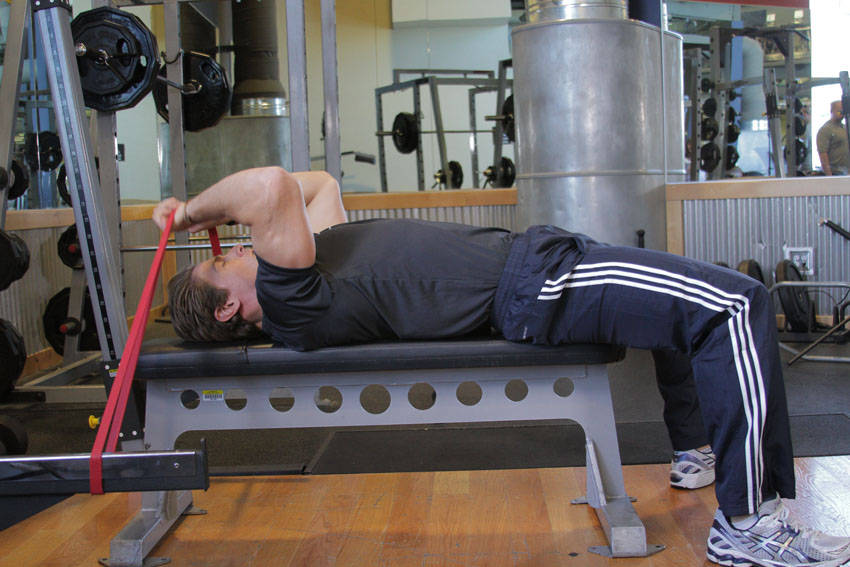
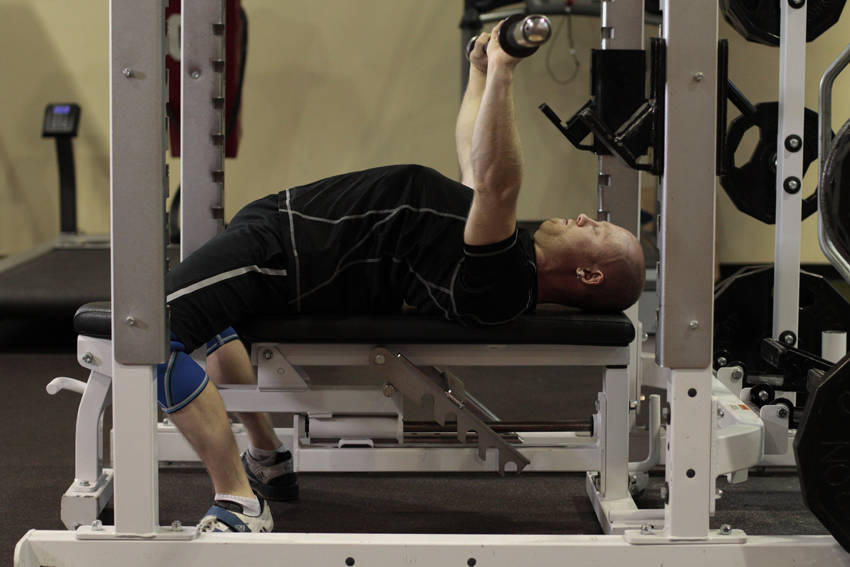
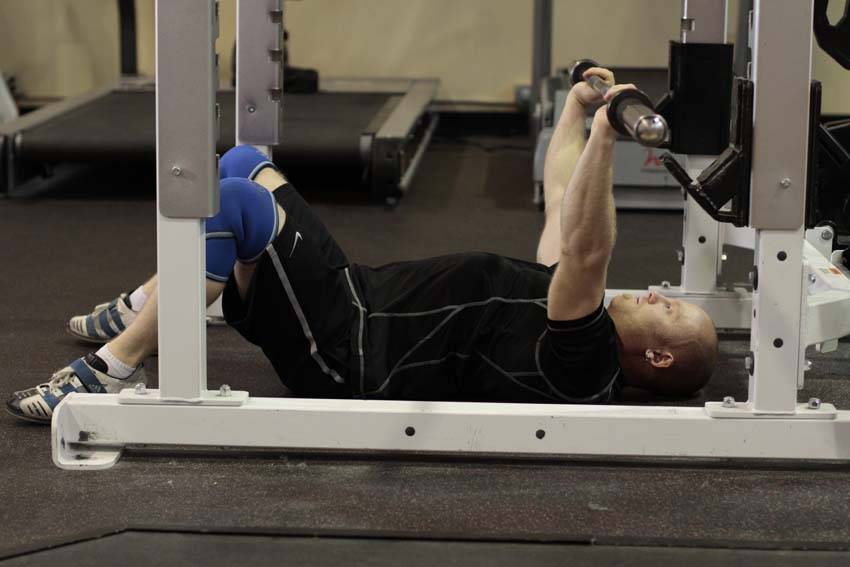
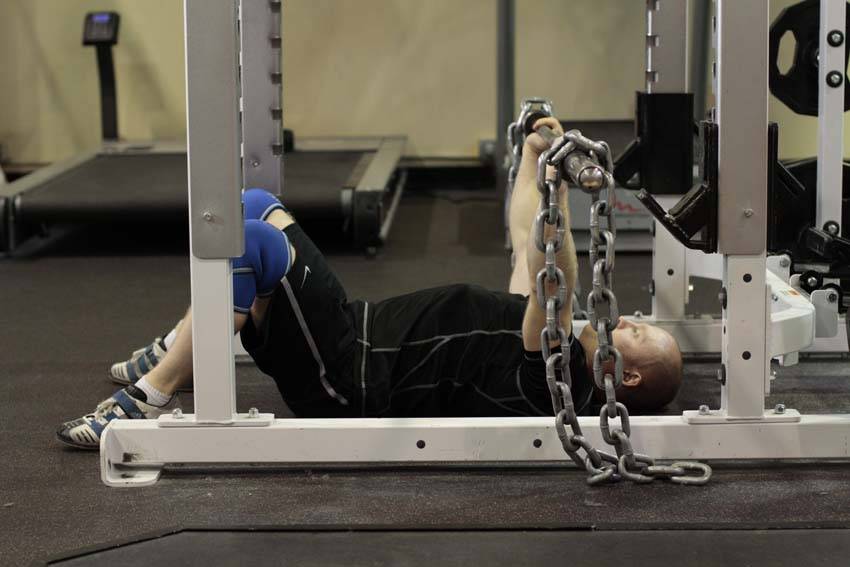
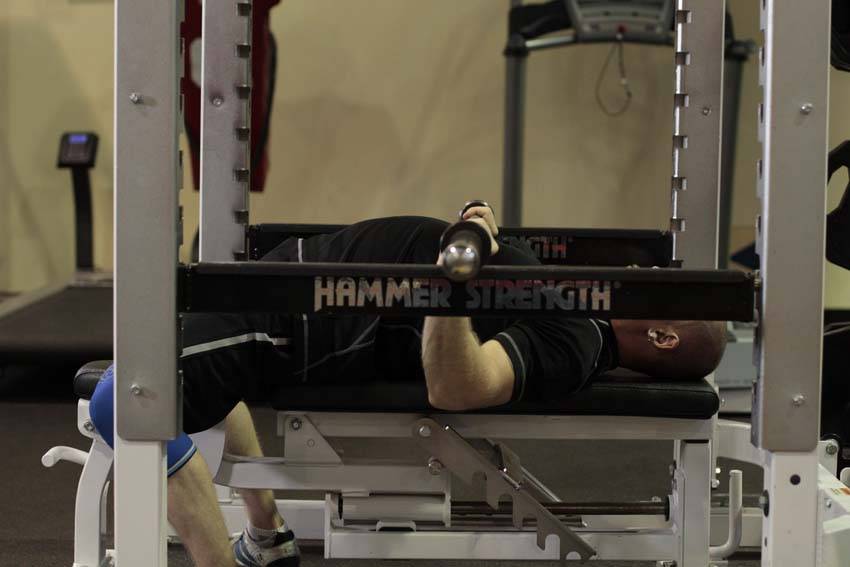
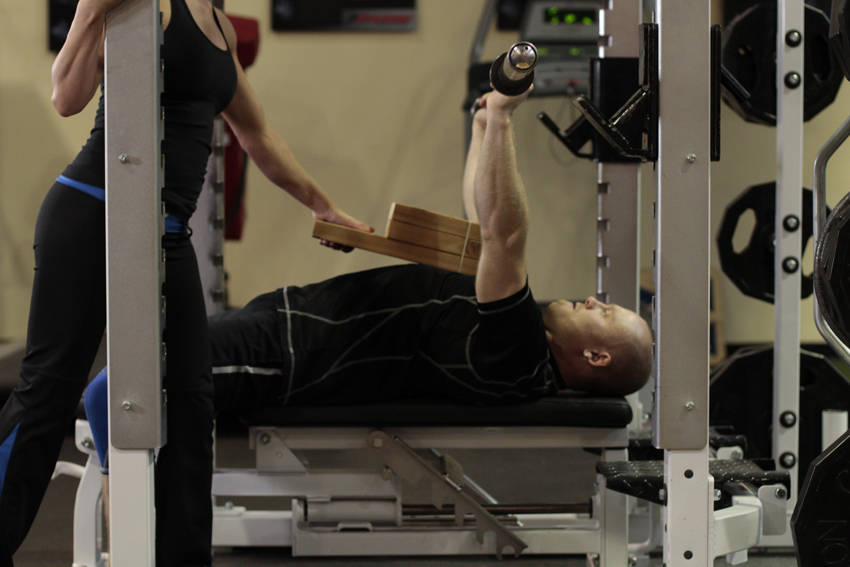
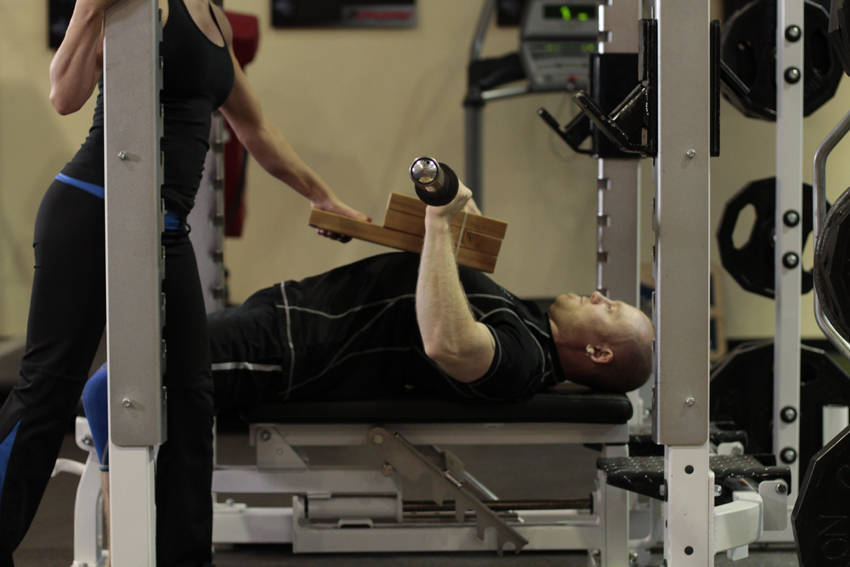
Begin by lying on the bench, getting your head beyond the bar if possible. One to five boards, made out of 2x6's, can be screwed together and held in place by a training partner, bands, or just tucked under your shirt.
Tuck your feet underneath you and arch your back. Using the bar to help support your weight, lift your shoulder off the bench and retract them, squeezing the shoulder blades together. Use your feet to drive your traps into the bench. Maintain this tight body position throughout the movement.
You can take a standard bench grip, or shoulder width to focus on the triceps. Pull the bar out of the rack without protracting your shoulders. The bar, wrist, and elbow should stay in line at all times. Focus on squeezing the bar and trying to pull it apart.
Lower the bar to the boards, and then drive the bar up with as much force as possible. The elbows should be tucked in until lockout.
Technique guidance
Exhale through the effort and inhale during the controlled return. Keep breathing steadily rather than holding your breath unintentionally.
General guidance based on the exercise and equipment. It is not personal coaching or medical advice.
Your progress
Keep the same barbell setup, range of motion and recording method when comparing Board Press sessions.
Weight, repetitions and completed sets.
Example: 3 sets of 8 reps at 30 kg. Next time, record the actual result, even if it is the same.
Look for more repetitions at the same weight, or a heavier weight for comparable repetitions. Total weight lifted also changes when you add sets, so it is not a strength score.
Read the tracking guideThe examples show how to keep a record. They are not workout targets or a personalised training plan.
See how Jijibisha tracks your progressMuscles
Muscle guide
Triceps is the primary muscle group. The lighter highlights show the supporting muscles involved in the movement.
In depth
The board press, sometimes searched as a bench board press, is a barbell bench-press variation in which the bar touches a stack of boards placed on the chest instead of travelling through the full bench-press range. The boards create a repeatable stopping point and shift the exercise toward the middle and top of the press.
This is a specialized strength-training variation, not a beginner substitute for learning a full-range bench press. It requires a secure board setup, a reliable handoff, and appropriate rack safeties or experienced spotters.
Quick answer: Set up as you would for a controlled barbell bench press, secure the boards on the chest, lower the bar to the same point on the boards, pause without bouncing, and press to a stable lockout.
Use boards designed for board pressing or a purpose-built bench block. A loose stack of improvised material can shift during the lift. One to five traditional boards change the range by different amounts; more boards create a shorter press.
Set the rack so the bar can be unracked without losing shoulder position. Use safety arms or pins at a height that protects the lifter without interfering with the intended range. A training partner may hold the boards, but that person should not place hands where the bar could trap them.
The triceps are a major target because the shortened range emphasizes elbow extension. The chest and front deltoids still contribute, while the upper back and trunk provide the base needed to control the bar.
A close or moderate grip usually increases the triceps demand. Grip changes also change wrist, elbow, and shoulder stress, so use a position you can control rather than chasing the narrowest possible grip.
Partial-range strength does not automatically transfer to every part of a full bench press. Treat the board height and grip as part of the exercise name when reviewing progress.
Bouncing makes the stopping point inconsistent and can shift the boards. Touch under control, pause briefly if your program calls for it, and press from a stable position.
More boards shorten the range. Select the height for a specific training reason and record it. Comparing a one-board press with a four-board press as though they are the same exercise produces a misleading progress trend.
A poor handoff can pull the shoulders forward before the repetition begins. Use a rack height and handoff that let you keep the shoulder blades set.
Keep the wrists reasonably stacked over the forearms and use an elbow path you can repeat. Sudden flaring or collapsing wrists often indicates that the load or touch point is not controlled.
Board presses are usually programmed as strength or accessory work rather than high-repetition conditioning.
Start below the load you expect to handle. Progress only when the same board height, grip, pause, touch point, and lockout remain consistent. Record those details in your notes.
Close-grip bench presses, pin presses, Spoto presses, floor presses, and cable or dumbbell triceps work can train related qualities with different equipment and ranges. A full-range bench press remains the more direct choice when the goal is full-range bench skill.
Do not board press alone without correctly positioned safeties. Check the board or block before every set, use collars when appropriate, and agree on handoff and spotting commands in advance. Stop if you feel sharp pain or cannot control the bar path.
When you log the movement, name the board height and grip so the next session is genuinely comparable. Track the variation and every completed set in Jijibisha.
Swap it
Different equipment, same muscle
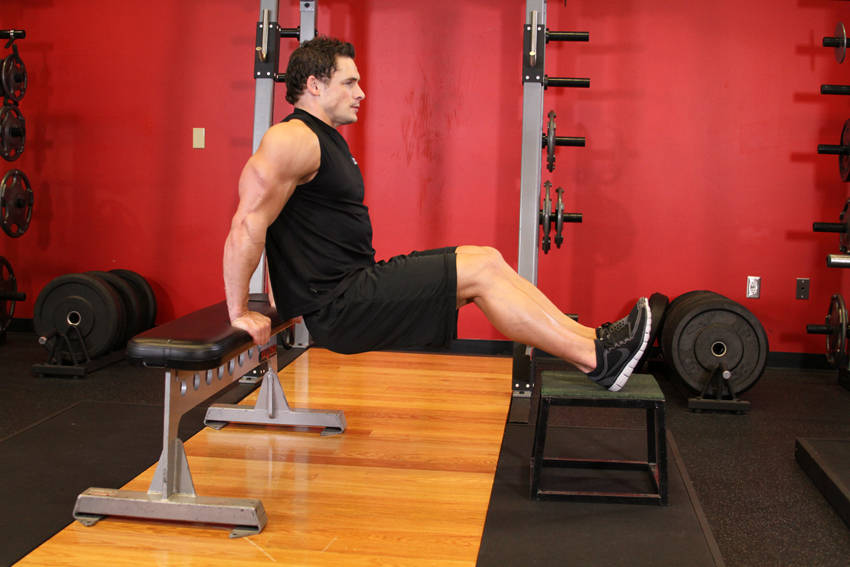
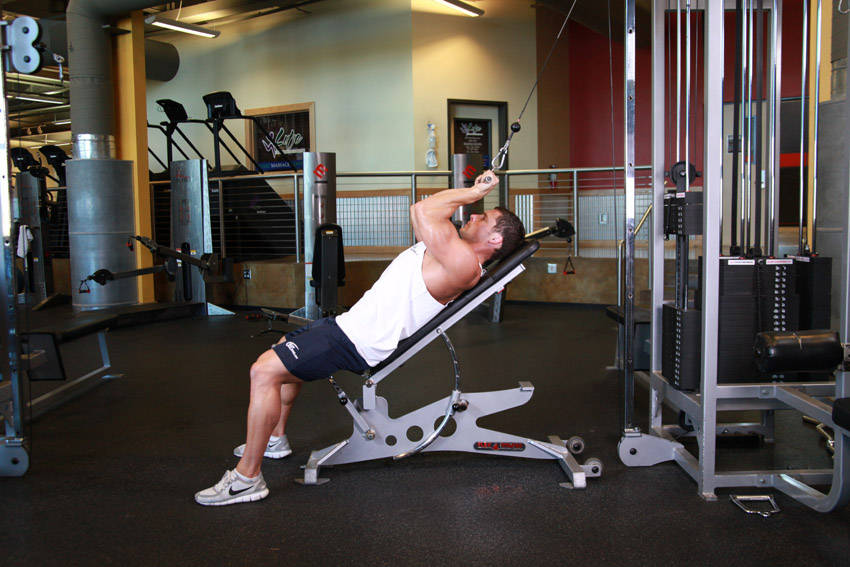
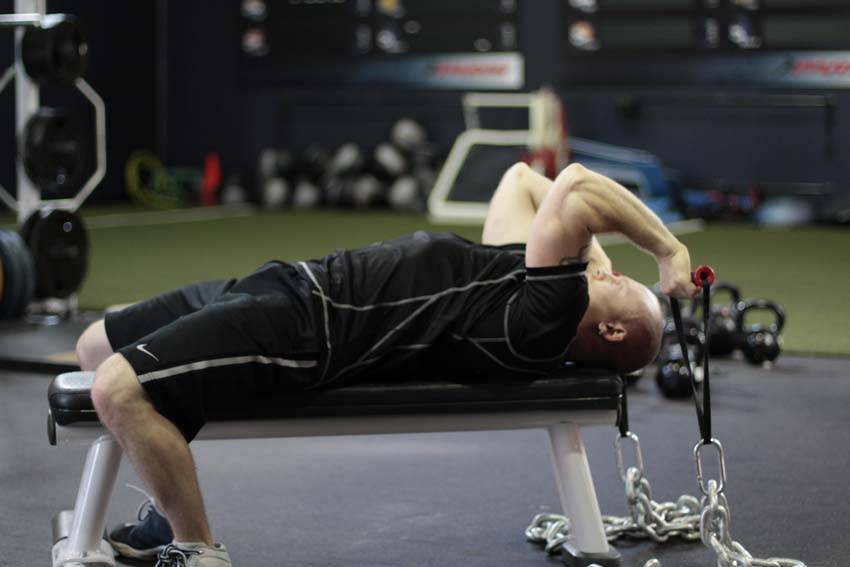
These movements also target the triceps using something else.
Related
Related movements
Get the app
Add it to a routine, record every completed set, and keep the workout saved on your phone even when the gym has no reception.