Breathing
Exhale as the target muscle shortens against resistance and inhale during the controlled return. Keep breathing steadily throughout the set.
Getting your next view ready…
The Bodyweight Flyes primarily works the chest, with the abdominals, shoulders and triceps supporting the movement. It is a strength movement performed with e-z curl bar.
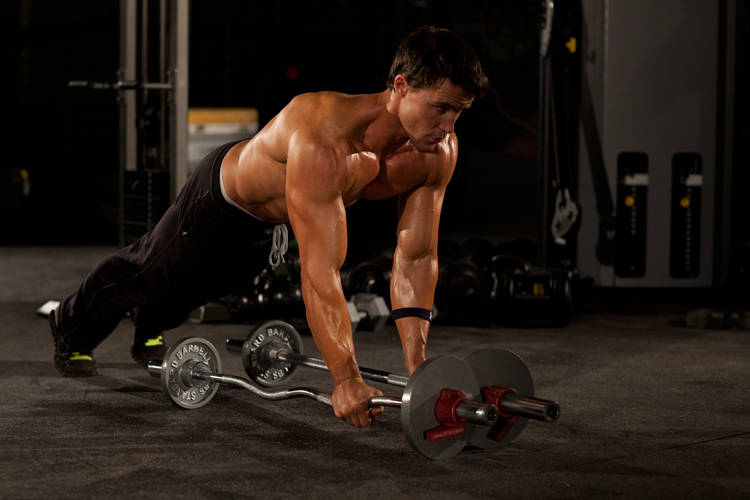
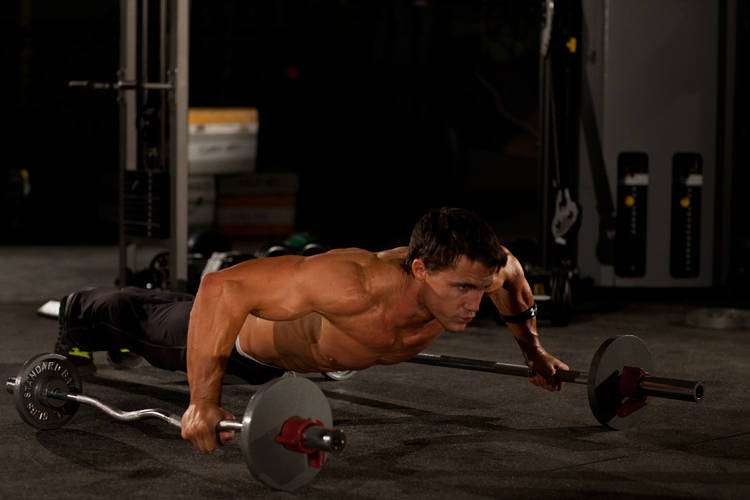 1 / 2
1 / 2How to
Movement instructions
Position two equally loaded EZ bars on the ground next to each other. Ensure they are able to roll.
Assume a push-up position over the bars, supporting your weight on your toes and hands with your arms extended and body straight.
Place your hands on the bars. This will be your starting position.
Using a slow and controlled motion, move your hands away from the midline of your body, rolling the bars apart. Inhale during this portion of the motion.
After moving the bars as far apart as you can, return to the starting position by pulling them back together. Exhale as you perform this movement.
Technique guidance
Exhale as the target muscle shortens against resistance and inhale during the controlled return. Keep breathing steadily throughout the set.
General guidance based on the exercise and equipment. It is not personal coaching or medical advice.
Your progress
Keep the same e-z curl bar setup, range of motion and recording method when comparing Bodyweight Flyes sessions.
Weight, repetitions and completed sets.
Example: 3 sets of 8 reps at 30 kg. Next time, record the actual result, even if it is the same.
Look for more repetitions at the same weight, or a heavier weight for comparable repetitions. Total weight lifted also changes when you add sets, so it is not a strength score.
Read the tracking guideThe examples show how to keep a record. They are not workout targets or a personalised training plan.
See how Jijibisha tracks your progressMuscles
Muscle guide
Chest is the primary muscle group. The lighter highlights show the supporting muscles involved in the movement.
In depth
Bodyweight flyes are a demanding chest exercise performed by moving the hands away from and back toward the body while holding a straight push-up position. In this catalogue variation, the hands rest on two equally loaded EZ-curl bars that can roll apart.
The name can be misleading: the exercise uses body weight as resistance, but it also relies on moving equipment. It requires considerably more shoulder, trunk, and equipment control than a standard push-up.
Quick answer: Start in a rigid push-up position over two equally loaded rolling bars, move the hands apart slowly, stop before losing shoulder or trunk control, then pull the bars back together while exhaling.
Use two matching EZ-curl bars with equal plates on a clean, level surface. The bars must roll smoothly without plates loosening or colliding with nearby equipment. Use collars where the equipment design requires them.
Leave enough room for both bars to travel outward. Do not position your face or fingers where a shifting plate or bar could trap them. If the setup is not predictable, choose rings, sliders, or a cable fly variation instead.
Use a slow range that you can reverse. The goal is not to spread the hands as far as possible.
The chest is the primary target. The front deltoids and triceps assist, while the abdominal muscles, glutes, upper back, and shoulder stabilizers work to keep the body and shoulder joints controlled.
Because the hands move, the stabilizing demand is higher than in a normal floor push-up. That instability does not automatically make the exercise more effective; it only makes control more important.
An excessive range can place the shoulders in a vulnerable position and make it impossible to return without bending the elbows or dropping the hips. Stop while you can still reverse the movement smoothly.
If the elbows bend sharply and the bars barely separate, the exercise becomes closer to a push-up. Keep a small, stable elbow bend and let the main motion come from the arms moving apart and together.
Sagging hips increase lower-back extension; lifting the hips reduces the chest demand. Use a shorter range or an easier variation when you cannot maintain a straight body line.
Unequal loading makes the bars roll differently. Loose plates and poor floor contact create avoidable risk. Check the setup before every set.
Momentum can carry the bars farther than your shoulders can control. Use a deliberate lowering phase and a smooth return.
Begin with 2–3 sets of 4–8 controlled repetitions. Stop with at least one or two technically sound repetitions remaining. This exercise is not well suited to rushed, high-repetition sets.
Progress by increasing the controlled range a little, slowing the lowering phase, or adding a repetition. Do not add external load until the equipment and full body position are consistently stable.
This variation is not a good starting point for someone who cannot yet hold a stable push-up position or who has not practiced controlled fly movements. People with current shoulder, wrist, or elbow pain should choose a comfortable alternative and seek individualized guidance when symptoms persist.
Always leave a clear escape path and stop when either bar behaves unpredictably. Log the exact variation and range notes in Jijibisha so progression reflects better control, not just more repetitions.
Swap it
Different equipment, same muscle
These movements also target the chest using something else.
Related
Related movements
Get the app
Add it to a routine, record every completed set, and keep the workout saved on your phone even when the gym has no reception.