Breathing
Exhale as the target muscle shortens against resistance and inhale during the controlled return. Keep breathing steadily throughout the set.
Getting your next view ready…
The Spider Curl primarily works the biceps. It is a strength movement performed with e-z curl bar.
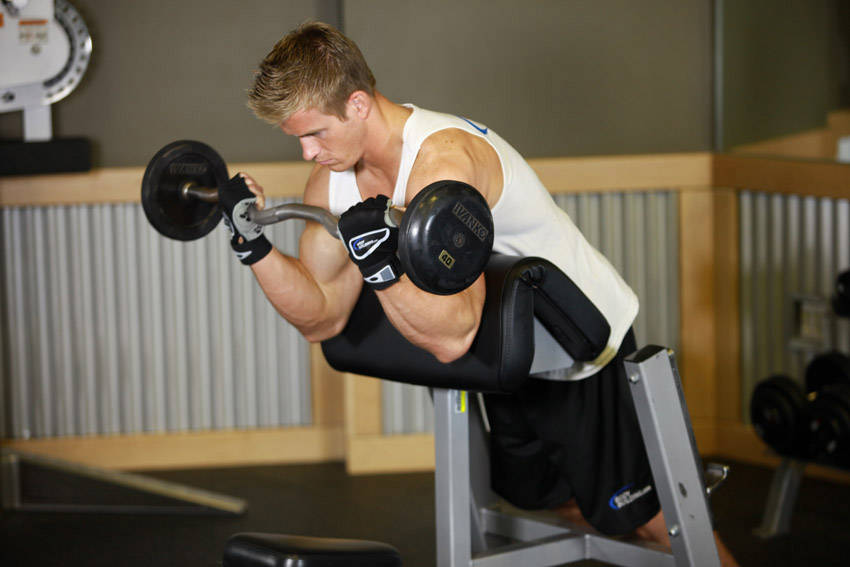 1 / 2
1 / 2How to
Movement instructions
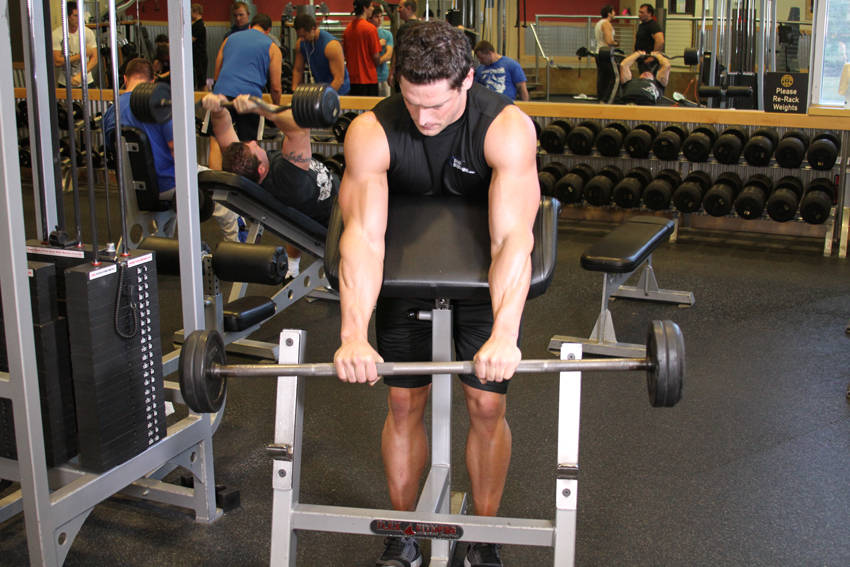
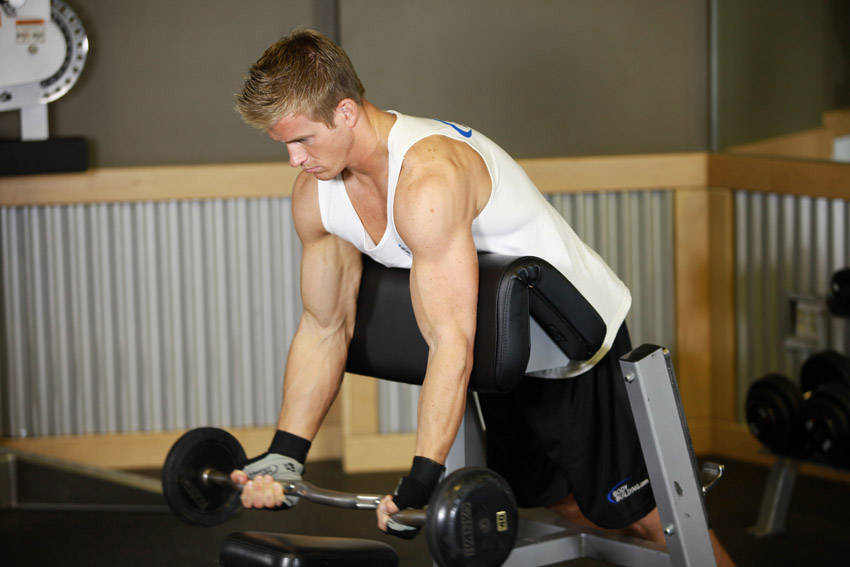
Start out by setting the bar on the part of the preacher bench that you would normally sit on. Make sure to align the barbell properly so that it is balanced and will not fall off.
Move to the front side of the preacher bench (the part where the arms usually lay) and position yourself to lay at a 45 degree slant with your torso and stomach pressed against the front side of the preacher bench.
Make sure that your feet (especially the toes) are well positioned on the floor and place your upper arms on top of the pad located on the inside part of the preacher bench.
Use your arms to grab the barbell with a supinated grip (palms facing up) at about shoulder width apart or slightly closer from each other.
Slowly begin to lift the barbell upwards and exhale. Hold the contracted position for a second as you squeeze the biceps.
Slowly begin to bring the barbell back to the starting position as your breathe in. .
Repeat for the recommended amount of repetitions.
Technique guidance
Exhale as the target muscle shortens against resistance and inhale during the controlled return. Keep breathing steadily throughout the set.
General guidance based on the exercise and equipment. It is not personal coaching or medical advice.
Your progress
Keep the same e-z curl bar setup, range of motion and recording method when comparing Spider Curl sessions.
Weight, repetitions and completed sets.
Example: 3 sets of 8 reps at 30 kg. Next time, record the actual result, even if it is the same.
Look for more repetitions at the same weight, or a heavier weight for comparable repetitions. Total weight lifted also changes when you add sets, so it is not a strength score.
Read the tracking guideThe examples show how to keep a record. They are not workout targets or a personalised training plan.
See how Jijibisha tracks your progressMuscles
Muscle guide
Biceps is the primary muscle group. The lighter highlights show the supporting muscles involved in the movement.
In depth
The spider curl is a biceps exercise performed with the upper arms supported or hanging in front of an incline bench. The bench reduces the opportunity to swing the torso, making it easier to see whether the elbows are actually performing the curl.
Quick answer: Lie chest-down against an incline bench with the arms hanging toward the floor, hold an EZ bar or dumbbells with palms facing up, and curl without moving the shoulders forward. Squeeze briefly near the top and lower until the elbows are straight but not forced into a hard lockout.
The biceps brachii are the primary target. The brachialis and brachioradialis assist with elbow flexion, while the forearm muscles maintain the grip. The bench supports the torso so momentum contributes less than it often does during standing curls.
No curl completely isolates one small part of the biceps. Spider curls simply provide a position that emphasizes strict elbow flexion with the arms in front of the torso.
Browse more biceps exercises and compare equipment options throughout the exercise library.
If you use a bar, place it where you can pick it up and set it down safely. A training partner or low cable setup may be preferable when reaching the floor is awkward.
Heavy loading often makes the shoulders swing forward or the torso lift from the bench. Reduce the weight until the upper arms stay quiet and the final repetition resembles the first.
When the forearms move beyond vertical, resistance at the biceps can decrease and the shoulders may take over. Stop where you still feel control rather than trying to bring the bar as high as possible.
Allowing the wrists to fold backward makes the grip less stable. Keep the knuckles and forearms aligned and use an EZ-bar angle that feels comfortable.
The arms should remain in front of the torso. Pulling the elbows backward changes the exercise and can shorten the range.
The lowering phase is part of the repetition. Control the bar or dumbbells until the arms are long, then reverse smoothly.
An EZ bar keeps both hands connected and offers angled grip positions that many people find comfortable. Dumbbells allow each arm to move independently and make differences between sides easier to notice.
Single-arm dumbbell spider curls can also simplify the setup. Support the chest on the bench, curl one side at a time, and use the free hand only for balance—not to assist the working arm.
Both exercises limit torso momentum, but the arm position differs. In a preacher curl, the upper arms rest on the angled pad. In a spider curl, the chest usually rests against the bench while the arms hang more vertically from the shoulder.
The preacher curl often feels hardest near the lower part of the movement, depending on equipment. The spider curl commonly feels strongest around the middle and upper portion. Use either variation that you can set up safely and perform without discomfort.
Two to four working sets of approximately 8–15 repetitions is a useful starting range. Spider curls usually need less weight than standing curls because the bench removes momentum.
Progress by adding repetitions while keeping the upper arms still. Once all sets reach the top of the range, add the smallest reasonable amount of weight and return toward the lower end.
Do not judge progress only by load. A longer controlled range, quieter shoulders, and a slower return can make the same weight more demanding and more repeatable.
A moderate incline that supports the chest while letting the arms hang freely works well. The exact setting depends on the bench, your height, and whether the bar can clear the floor safely.
The supported torso and forward arm position reduce the ability to swing or move the elbows backward. That makes a lighter weight feel challenging.
Lower until the arms are long and the biceps are under control. Do not force the elbow into a painful lockout or let the weight pull the shoulder forward.
They can be, especially with light dumbbells. The main challenge is setting up the bench and weight safely. Beginners should learn a controlled curl before chasing heavier resistance.
Preacher curls, incline dumbbell curls, cable curls, and strict standing curls are reasonable alternatives. Choose the variation that fits the available equipment and allows pain-free elbow movement.
Spider curls reward control more than load. Keep the torso supported, the upper arms quiet, and the wrists aligned while you curl and lower through a repeatable range.
Place them in a custom arm routine and use the Jijibisha workout tracker to record each set on Android, iPhone, or iPad.
Swap it
Different equipment, same muscle
These movements also target the biceps using something else.
Related
Get the app
Add it to a routine, record every completed set, and keep the workout saved on your phone even when the gym has no reception.