Breathing
Exhale during the explosive effort, then take a controlled breath as you reset. Recover between repetitions so breathing and landing control stay consistent.
Getting your next view ready…
The Box Skip primarily works the hamstrings, with the abductors, adductors, calves, glutes and quadriceps supporting the movement. It is a plyometrics movement performed with other.
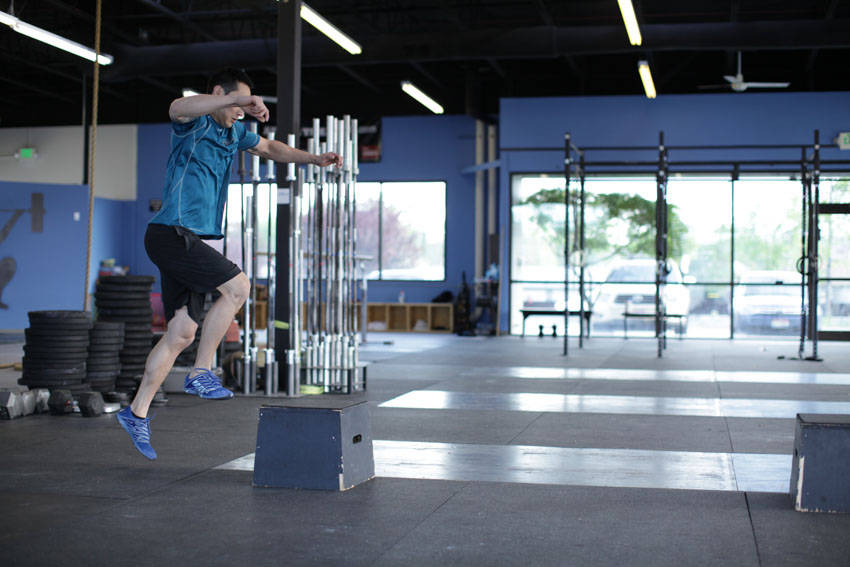
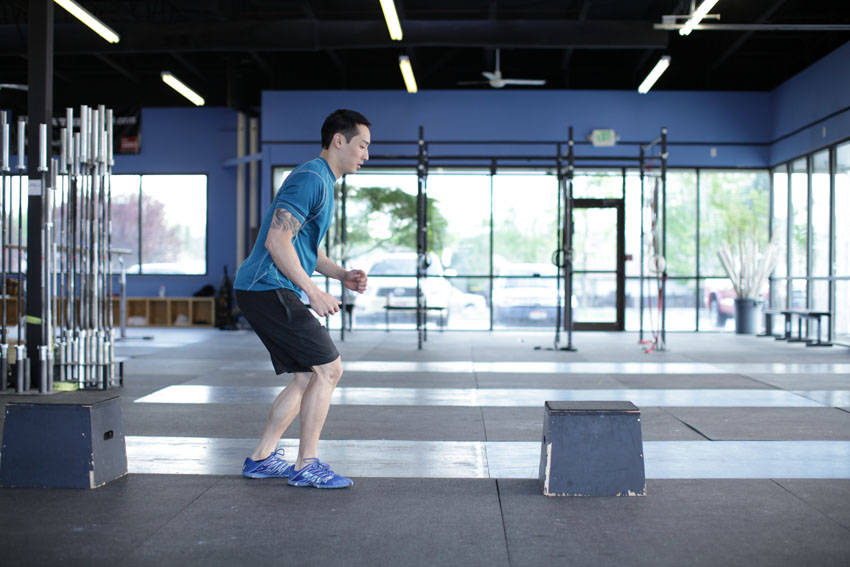 1 / 2
1 / 2How to
Movement instructions
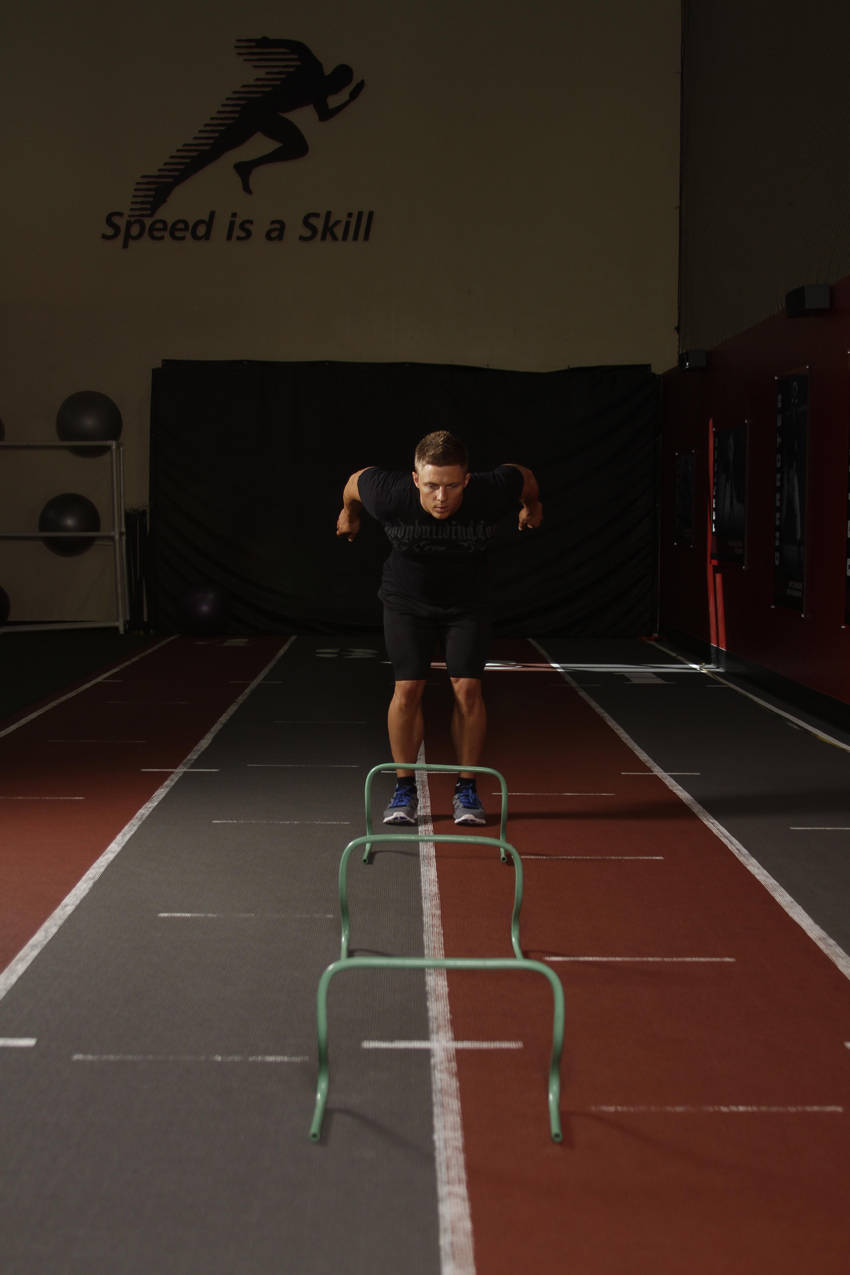
You will need several boxes lined up about 8 feet apart.
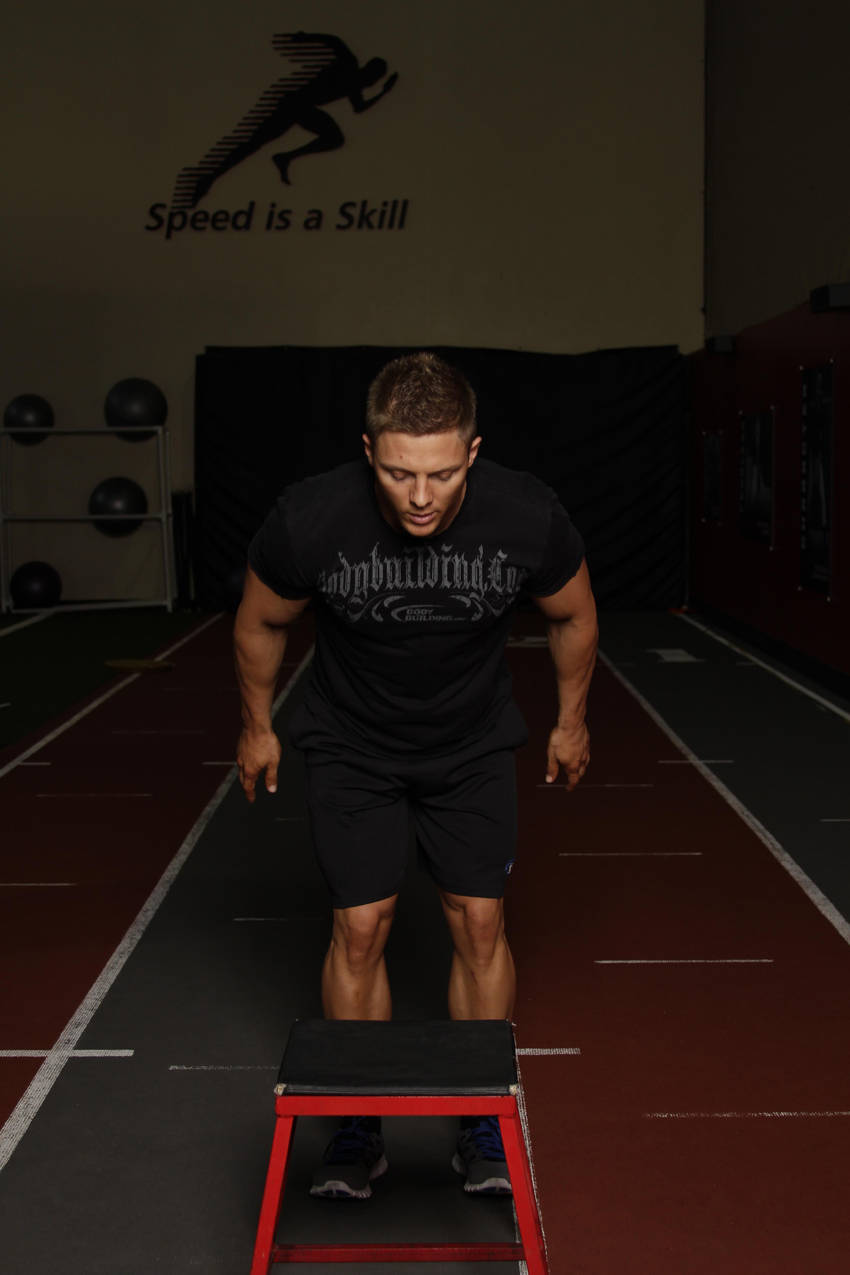
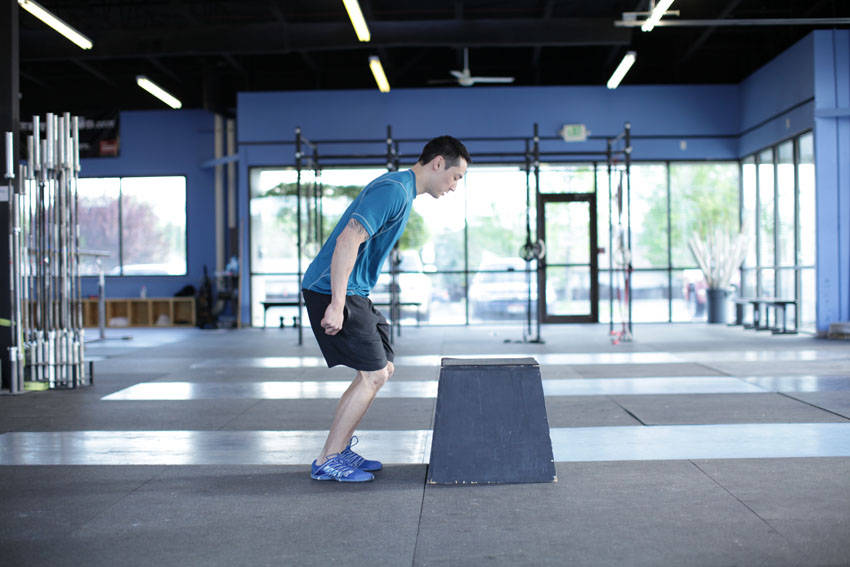
Begin facing the first box with one leg slightly behind the other.
Drive off the back leg, attempting to gain as much height with the hips as possible.
Immediately upon landing on the box, drive the other leg forward and upward to gain height and distance, leaping from the box. Land between the first two boxes with the same leg that landed on the first box.
Then, step to the next box and repeat.
Technique guidance
Exhale during the explosive effort, then take a controlled breath as you reset. Recover between repetitions so breathing and landing control stay consistent.
General guidance based on the exercise and equipment. It is not personal coaching or medical advice.
Your progress
Keep the same other setup, range of motion and recording method when comparing Box Skip sessions.
Repetitions and completed sets.
Example: 10, 9 and 8 completed reps. Keep each set separate instead of recording only the total.
Compare repetitions using the same variation and range. A different variation needs its own history; extra reps are not directly comparable if the movement changes.
Read the tracking guideThe examples show how to keep a record. They are not workout targets or a personalised training plan.
See how Jijibisha tracks your progressMuscles
Muscle guide
Hamstrings is the primary muscle group. The lighter highlights show the supporting muscles involved in the movement.
In depth
The box skip is a repeated jumping drill that uses a line of stable boxes. The athlete jumps onto a box, immediately drives the opposite leg forward and up, then continues toward the next landing area. It combines single-leg takeoff and landing skill with rhythm, height, and forward movement.
Despite the familiar word “skip,” this is not casual footwork. It needs stable equipment, clear space, and enough jumping and landing control to stay balanced.
Quick answer: Begin with a staggered stance, drive from the back leg onto the first box, land quietly and securely, then use the other leg to continue the skipping pattern. Prioritize stable landings over speed or box height.
Learn the pattern at a low height. The drill should look controlled before it becomes fast or explosive.
Box skips challenge the hamstrings, glutes, quadriceps, calves, and muscles that stabilize the hips, knees, ankles, and trunk. They also train timing, single-leg coordination, landing control, and the ability to redirect force.
The drill is better treated as power or skill practice than as a fatigue challenge. Quality usually falls when too many repetitions are packed together.
High boxes can turn the landing into a scramble. Lower the height until you can land with the whole foot supported and your balance centered.
An immediate transition is only useful when the first landing is secure. Pause, step down, or reset when your foot placement or knee alignment is uncertain.
Keep the knee following the direction of the foot during takeoff and landing. Reduce speed, height, or distance if that alignment cannot be maintained.
Absorb the landing through the ankle, knee, and hip instead of arriving with a locked leg. Aim for a quiet contact rather than a hard slap against the box.
Fatigue increases the chance of missing a box or losing the intended rhythm. Stop while your jumps remain crisp and repeatable.
Use low-volume practice with generous rest:
Count only controlled contacts. More repetitions are not better when height, distance, or alignment deteriorates.
Start with marching knee drives, low step-ups with a knee drive, line skips, or single low box step-offs and landings. A low box jump with a full reset between repetitions is another useful step before a continuous sequence.
Progress one variable at a time: slightly more height, distance, speed, or continuity. Do not increase all of them in the same session. A longer sequence is only a progression when every box and floor landing remains stable.
People who cannot land comfortably on one leg, have not practiced basic jumping, or are returning from a lower-body injury should use a simpler drill. Stop for pain, dizziness, repeated balance loss, or any equipment movement.
Use boxes built for jumping on a flat, uncluttered surface. Avoid unstable benches, stools, or stacked objects. A missed landing can cause a fall even at a modest height.
Record box height, spacing, contacts, and whether you reset between jumps. Jijibisha can keep those drill notes with the workout, including when you train without a connection.
Swap it
Different equipment, same muscle
These movements also target the hamstrings using something else.
Related
Related movements
Get the app
Add it to a routine, record every completed set, and keep the workout saved on your phone even when the gym has no reception.