Breathing
Exhale as the target muscle shortens against resistance and inhale during the controlled return. Keep breathing steadily throughout the set.
Getting your next view ready…
The Seated Leg Curl primarily works the hamstrings. It is a strength movement performed with machine.
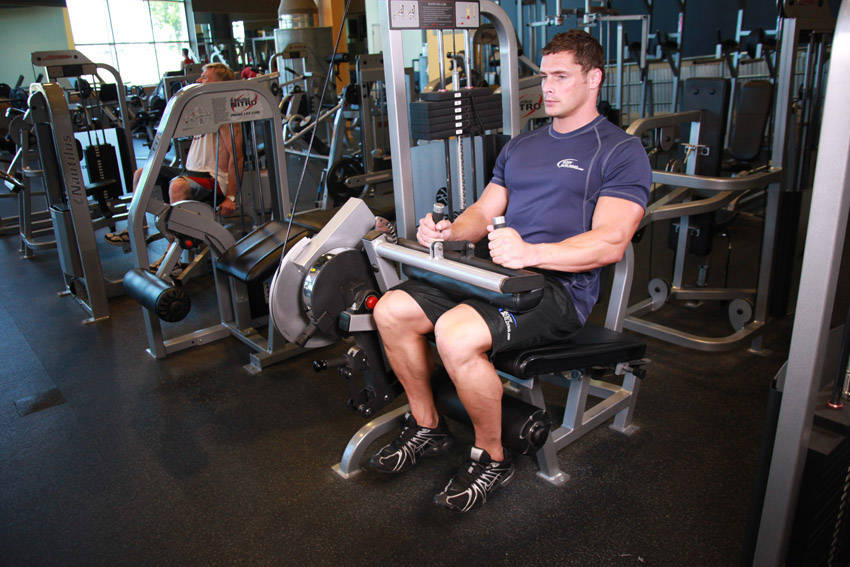 1 / 2
1 / 2How to
Movement instructions
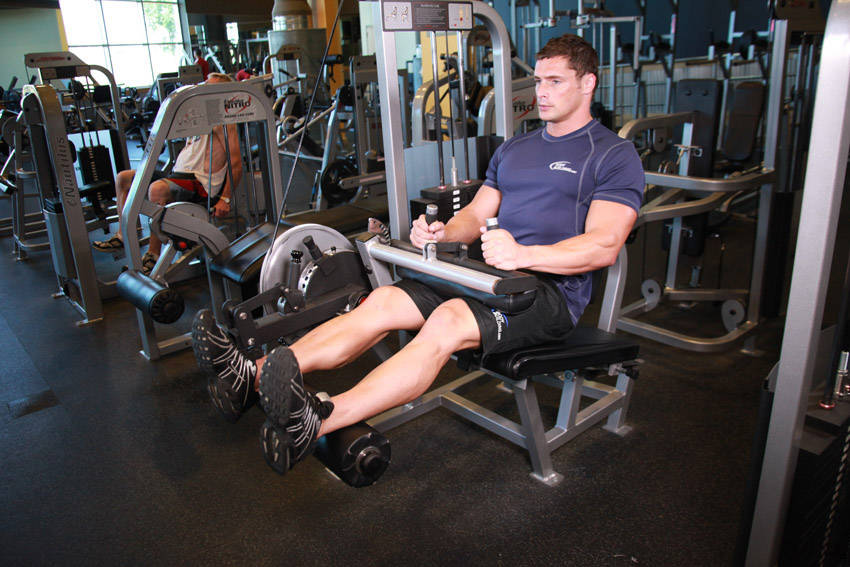
Adjust the machine lever to fit your height and sit on the machine with your back against the back support pad.
Place the back of lower leg on top of padded lever (just a few inches under the calves) and secure the lap pad against your thighs, just above the knees. Then grasp the side handles on the machine as you point your toes straight (or you can also use any of the other two stances) and ensure that the legs are fully straight right in front of you. This will be your starting position.
As you exhale, pull the machine lever as far as possible to the back of your thighs by flexing at the knees. Keep your torso stationary at all times. Hold the contracted position for a second.
Slowly return to the starting position as you breathe in.
Repeat for the recommended amount of repetitions.
Technique guidance
Exhale as the target muscle shortens against resistance and inhale during the controlled return. Keep breathing steadily throughout the set.
General guidance based on the exercise and equipment. It is not personal coaching or medical advice.
Your progress
Keep the same machine setup, range of motion and recording method when comparing Seated Leg Curl sessions.
Weight, repetitions and completed sets.
Example: 3 sets of 8 reps at 30 kg. Next time, record the actual result, even if it is the same.
Look for more repetitions at the same weight, or a heavier weight for comparable repetitions. Total weight lifted also changes when you add sets, so it is not a strength score.
Read the tracking guideThe examples show how to keep a record. They are not workout targets or a personalised training plan.
See how Jijibisha tracks your progressMuscles
Muscle guide
Hamstrings is the primary muscle group. The lighter highlights show the supporting muscles involved in the movement.
In depth
The seated leg curl is a machine exercise that trains the hamstrings by bending the knees against resistance. The supported position makes it easy to keep the movement consistent, while the adjustable pads help different users line up with the machine correctly.
Quick answer: Adjust the seat so your knees line up with the machine pivot, place the lower pad just above the heels, secure the thigh pad without crushing your legs, and curl the pad down and back. Pause briefly, then return slowly without letting the weight stack slam.
The hamstrings are the primary muscles used in the seated leg curl. These muscles cross the knee and help bend it. The calf can assist slightly, while the thigh pad, seat, and handles help keep the hips and torso from moving.
The exercise isolates knee flexion more than hip-hinge movements such as Romanian deadlifts. Using both patterns in a program can train the hamstrings through different joint actions.
Browse more hamstring exercises or compare other supported movements in the machine exercise library.
Machine designs vary. Use the setup markings as a starting point, then adjust for joint alignment and comfort rather than copying another person's seat number.
If the knees sit far in front of or behind the machine's rotational axis, the pad can move awkwardly across the legs. Recheck the backrest before increasing the weight.
A pad high on the calf shortens the lever and may make the selected weight appear easier. Position it near the lower calf, above the heel, while avoiding pressure directly on the Achilles tendon.
The thigh restraint should help keep the hips down. If your hips rise to finish every repetition, reduce the resistance or adjust the seat and pad position.
Letting the stack pull the legs forward removes control from the lengthening phase. Use a resistance you can return smoothly without the plates crashing.
Use a comfortable starting position. Some machines allow the knees to extend farther than others. Do not force extra range if the back of the knee feels compressed or painful.
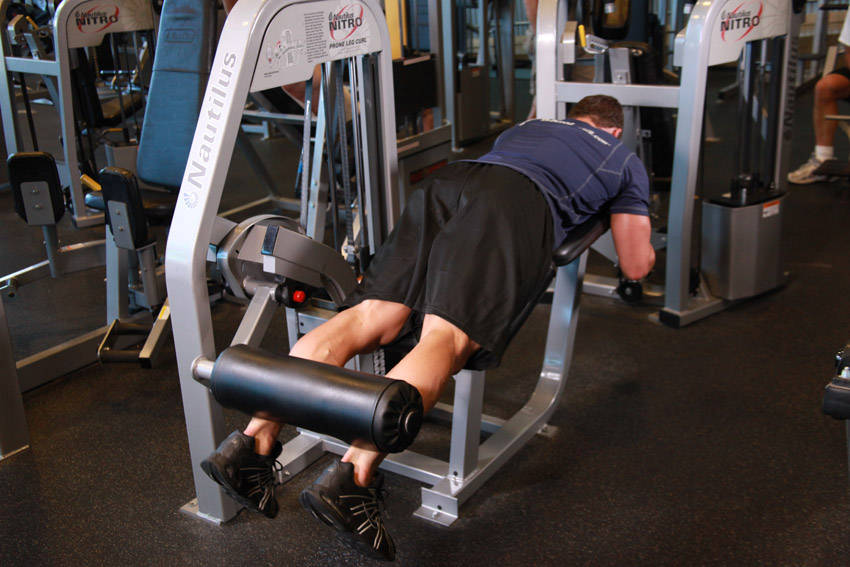
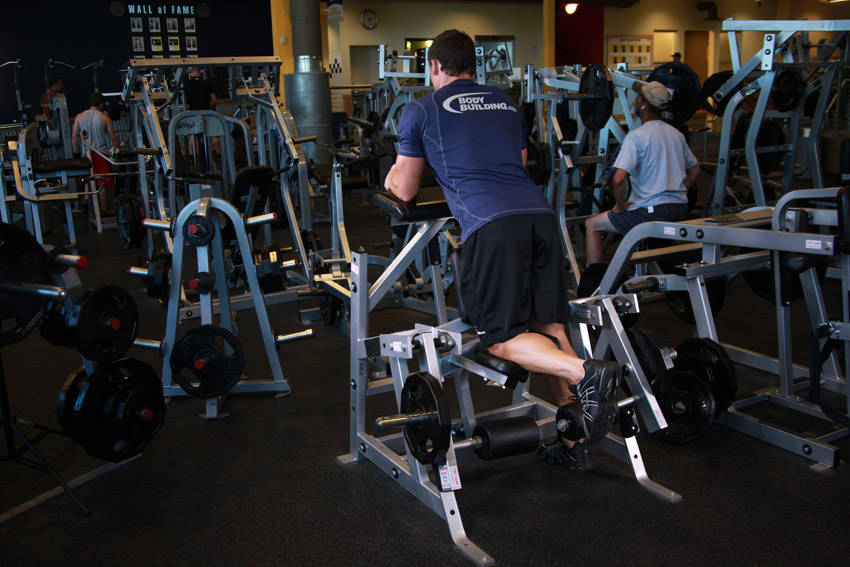
Both exercises train knee flexion. The seated version places the hips in a flexed position, which lengthens portions of the hamstrings before the curl begins. The lying version keeps the hips more extended and may feel easier to stabilize for some lifters.
Neither machine is automatically the correct choice for everyone. Use the version that fits your body, provides a comfortable pad path, and is available consistently enough to track progression.
Two to four working sets of roughly 8-20 controlled repetitions is a practical range for many routines. Start with a weight that allows a full, repeatable curl without lifting the hips.
A simple progression method is:
Machine labels are not standardized, so a 30-kilogram setting on one machine may not feel like the same load on another. Record the gym or machine when consistency matters.
Use the Jijibisha workout tracker to store the resistance, repetitions, and seat settings instead of relying on memory.
The main effort should be in the back of the thighs. Some calf involvement can occur. Sharp pain behind the knee, pressure from the pads, or cramping that prevents controlled movement is a reason to stop and adjust.
Keep the ankle in a comfortable, repeatable position. Strongly pointing or pulling the toes back can change how much the calf contributes, but it is not necessary for an effective leg curl.
They train knee flexion well but do not replace every hip-hinge movement. A balanced routine may also include a Romanian deadlift, good morning, hip hinge, or another exercise that trains the hamstrings at the hip.
Do not force the setup. Try a lying or standing leg curl, resistance-band curl, slider curl, or another hamstring exercise that allows better alignment.
The seated leg curl works best when the machine fits your joints, the hips stay down, and both halves of each repetition remain controlled. Keep the settings consistent and progress only when the same range can be repeated cleanly.
Add it to a training routine and use Jijibisha to track every set offline.
Swap it
Different equipment, same muscle
These movements also target the hamstrings using something else.
Related
Related movements
Get the app
Add it to a routine, record every completed set, and keep the workout saved on your phone even when the gym has no reception.