Breathing
Inhale and set your trunk before the lowering phase, then exhale as you extend the hips. Reset your breath between controlled repetitions.
Getting your next view ready…
The Sumo Deadlift primarily works the hamstrings, with the adductors, forearms, glutes, lower back, middle back, quadriceps and traps supporting the movement. It is a powerlifting movement performed with barbell.
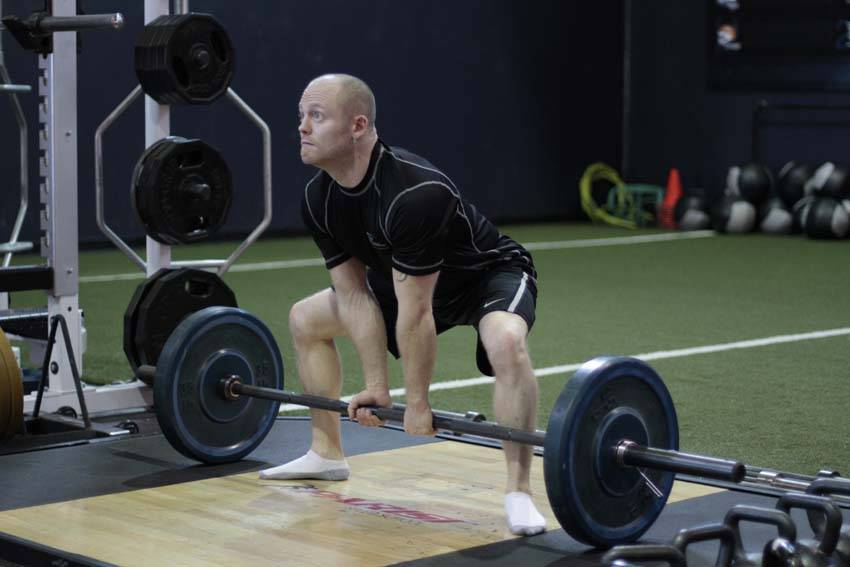
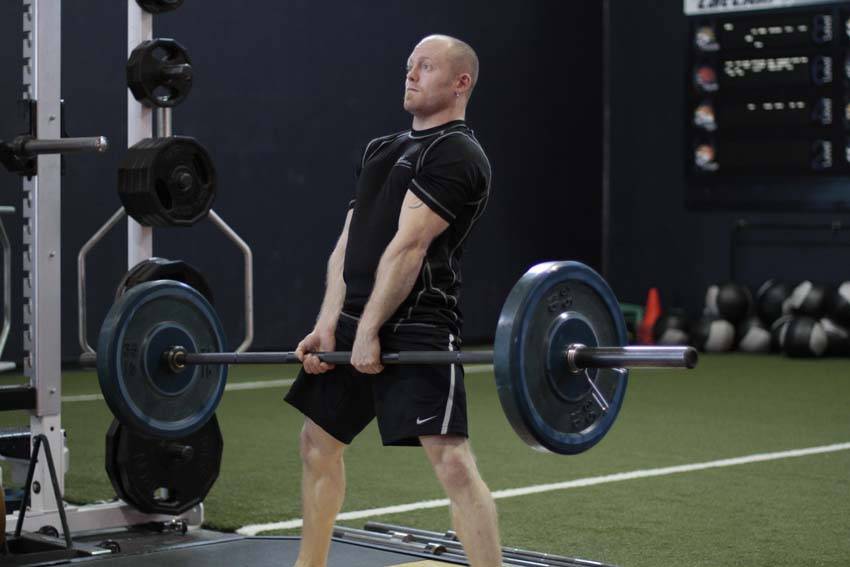 1 / 2
1 / 2How to
Movement instructions
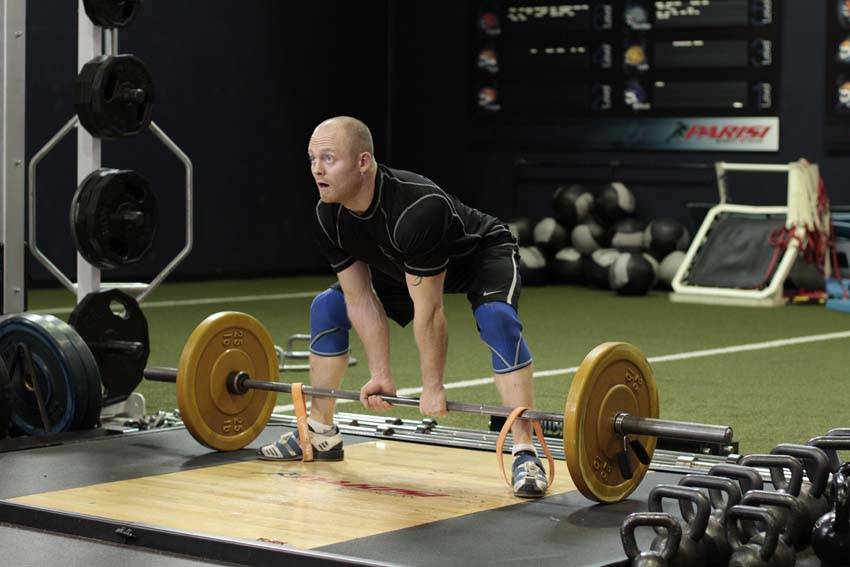
Begin with a bar loaded on the ground. Approach the bar so that the bar intersects the middle of the feet. The feet should be set very wide, near the collars. Bend at the hips to grip the bar. The arms should be directly below the shoulders, inside the legs, and you can use a pronated grip, a mixed grip, or hook grip. Relax the shoulders, which in effect lengthens your arms.
Take a breath, and then lower your hips, looking forward with your head with your chest up. Drive through the floor, spreading your feet apart, with your weight on the back half of your feet. Extend through the hips and knees.
As the bar passes through the knees, lean back and drive the hips into the bar, pulling your shoulder blades together.
Return the weight to the ground by bending at the hips and controlling the weight on the way down.
Technique guidance
Inhale and set your trunk before the lowering phase, then exhale as you extend the hips. Reset your breath between controlled repetitions.
General guidance based on the exercise and equipment. It is not personal coaching or medical advice.
Your progress
Keep the same barbell setup, range of motion and recording method when comparing Sumo Deadlift sessions.
Weight, repetitions and completed sets.
Example: 3 sets of 8 reps at 30 kg. Next time, record the actual result, even if it is the same.
Look for more repetitions at the same weight, or a heavier weight for comparable repetitions. Total weight lifted also changes when you add sets, so it is not a strength score.
Read the tracking guideThe examples show how to keep a record. They are not workout targets or a personalised training plan.
See how Jijibisha tracks your progressMuscles
Muscle guide
Hamstrings is the primary muscle group. The lighter highlights show the supporting muscles involved in the movement.
In depth
The sumo deadlift is a barbell deadlift performed with a wide stance and the hands inside the legs. The wider setup shortens the distance the bar travels for many lifters and changes the hip, knee, and torso positions compared with a conventional deadlift. It is still a deadlift: the goal is to move a bar from the floor to a controlled standing lockout while keeping it close to the body.
Quick answer: Stand wide enough for your knees to track over your feet, place the bar over mid-foot, grip inside your legs, brace before the pull, and push the floor apart as your hips and shoulders rise together.
Start wider than your normal squat stance, but not automatically as wide as the plates. Turn your toes out enough that your knees can follow them without collapsing inward.
Stance width depends on hip structure, mobility, limb lengths, and comfort. If you cannot reach the bar without your knees rolling inward or your lower back losing position, bring your feet closer.
From the side, the bar should begin over the middle of each foot. Keep it close to your shins without rolling it away as you lower into position.
Reach straight down so your arms hang inside your knees. Use a double-overhand grip while loads are manageable. A hook or mixed grip can help at heavier loads, but each has trade-offs and should be learned deliberately.
Take a breath, brace your trunk, and tighten your upper back. Think about pulling the slack out of the bar rather than jerking it from the floor. Your arms remain long; they connect your torso to the bar but do not curl it.
Drive your feet into the floor while keeping your knees tracking over your toes. The bar, hips, and shoulders should begin moving together. Keep the bar close as it passes your knees.
Extend your hips and knees until you are upright. Do not lean back or force your lower spine into extra extension. At lockout, your ribs, pelvis, and head should look controlled rather than exaggerated.
Send your hips back, then bend your knees as the bar clears them. Keep the bar close and let it settle before resetting your brace for another repetition.
The sumo deadlift trains the hamstrings, glutes, quadriceps, adductors, spinal erectors, upper back, and grip. The exact contribution of each area changes with stance, individual proportions, and technique.
The wider stance and more upright torso often increase the visible role of the quadriceps and adductors. That does not make the movement an isolation exercise, and it does not remove the posterior chain.
A stance is only useful when you can create force from it. Excessive width can make it hard to keep the knees aligned, reach the bar, or finish the lift. Move your feet inward until you can brace and push smoothly.
Keep the knees following the direction of the toes. If they cave as the bar leaves the floor, reduce the load, adjust your foot angle, or narrow the stance.
Dropping into a squat can push the bar forward and make the hips rise before the bar moves. Set your hips where your shoulders remain above the bar and you can feel tension through the legs and trunk.
A sudden yank can pull you out of position. Brace, take the slack out, then increase force against the floor.
The repetition ends when your hips and knees are extended. Do not chase extra range by pushing the hips far forward or leaning the shoulders behind them.
Take a controlled breath before each heavy repetition and brace around your trunk. Hold that pressure through the hardest part of the pull, then reset at lockout or after returning the bar.
Breath-holding under load is not appropriate for everyone. Use lighter loads while learning, and seek individualized guidance if you have a condition affected by pressure or heavy exertion.
Use technically repeatable sets rather than testing a maximum when learning the movement.
Progress by adding a small amount of load or an additional good repetition while keeping the same setup and range. Stop a set when the bar drifts forward, the knees lose alignment, or your brace changes noticeably.
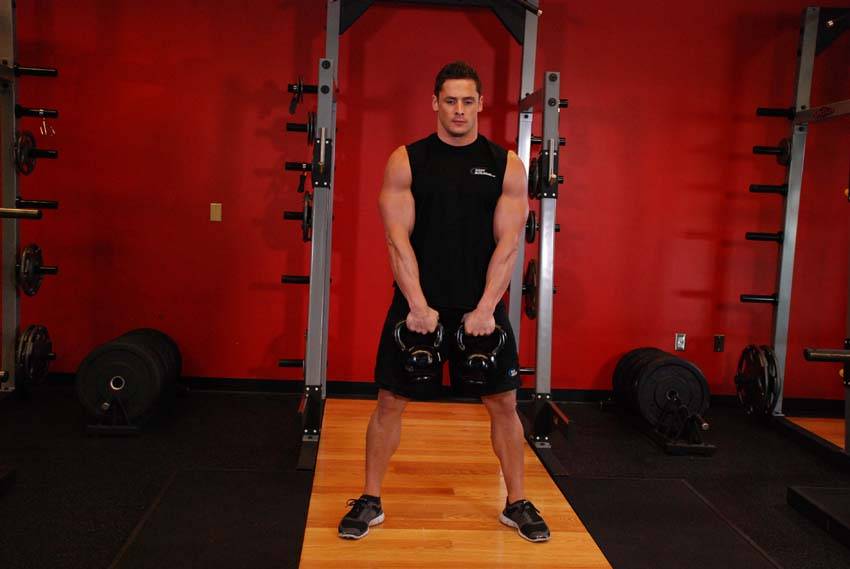
If the floor start is difficult, use a kettlebell sumo deadlift or elevate the bar on stable blocks. These options reduce the required range while preserving a wide-stance hinge pattern.
Useful alternatives include conventional deadlifts, trap-bar deadlifts, Romanian deadlifts, and cable pull-throughs. Choose the variation you can perform consistently and without pain.
The sumo deadlift is not automatically safer or better for every body. Modify the stance or choose another hinge when the position causes pinching, sharp pain, or loss of control. People returning from injury or managing a medical condition should use individualized professional guidance.
Track the exact variation, load, and repetitions rather than mixing every deadlift style into one history. Jijibisha can keep those sets available offline so your next session starts from a real record.
Swap it
Different equipment, same muscle
These movements also target the hamstrings using something else.
Related
Related movements
Get the app
Add it to a routine, record every completed set, and keep the workout saved on your phone even when the gym has no reception.