Breathing
Exhale through the abdominal effort and inhale during the controlled return. Keep the neck relaxed and do not hold your breath.
Getting your next view ready…
The Cable Crunch primarily works the abdominals. It is a strength movement performed with cable.
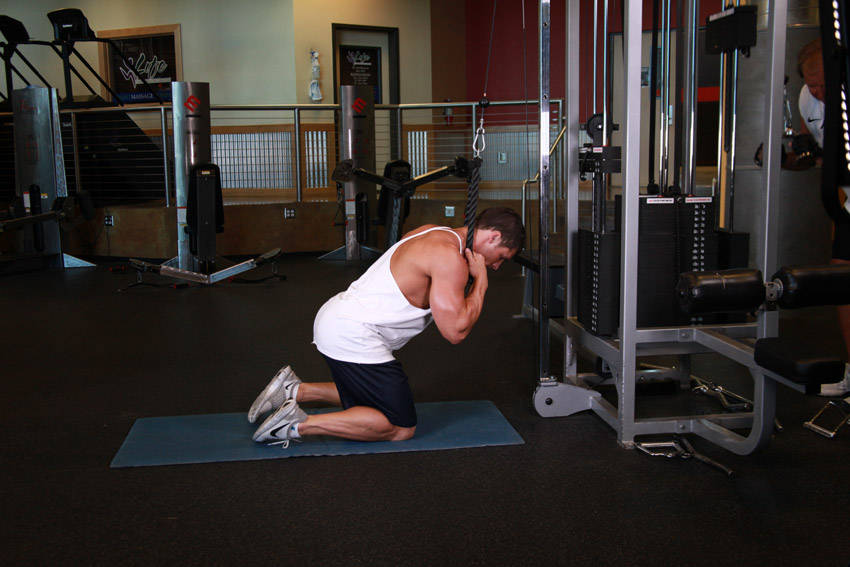
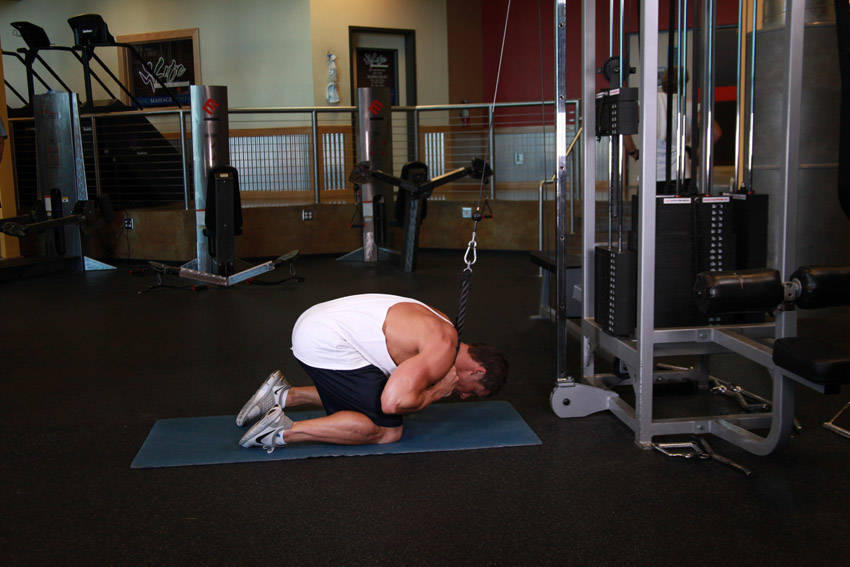 1 / 2
1 / 2How to
Movement instructions
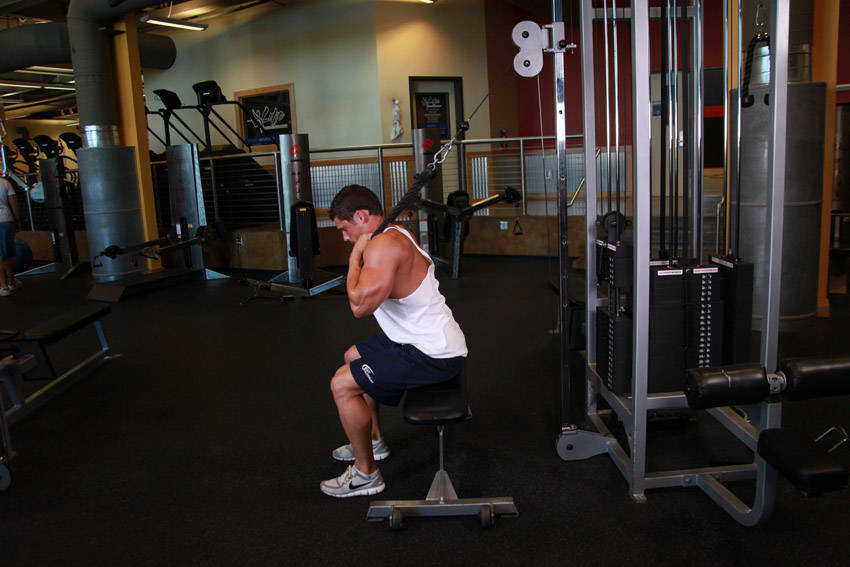
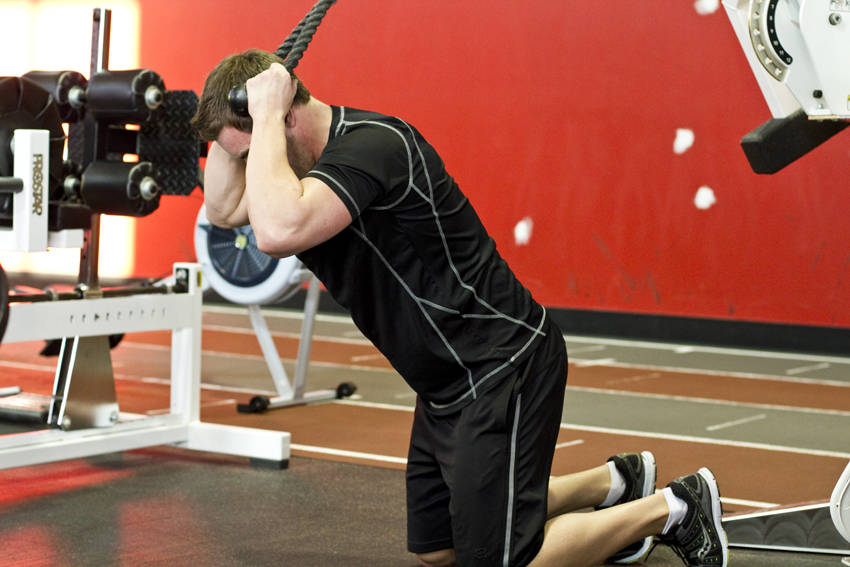
Kneel below a high pulley that contains a rope attachment.
Grasp cable rope attachment and lower the rope until your hands are placed next to your face.
Flex your hips slightly and allow the weight to hyperextend the lower back. This will be your starting position.
With the hips stationary, flex the waist as you contract the abs so that the elbows travel towards the middle of the thighs. Exhale as you perform this portion of the movement and hold the contraction for a second.
Slowly return to the starting position as you inhale. Tip: Make sure that you keep constant tension on the abs throughout the movement. Also, do not choose a weight so heavy that the lower back handles the brunt of the work.
Repeat for the recommended amount of repetitions.
Technique guidance
Exhale through the abdominal effort and inhale during the controlled return. Keep the neck relaxed and do not hold your breath.
General guidance based on the exercise and equipment. It is not personal coaching or medical advice.
Your progress
Keep the same cable setup, range of motion and recording method when comparing Cable Crunch sessions.
Weight, repetitions and completed sets.
Example: 3 sets of 8 reps at 30 kg. Next time, record the actual result, even if it is the same.
Look for more repetitions at the same weight, or a heavier weight for comparable repetitions. Total weight lifted also changes when you add sets, so it is not a strength score.
Read the tracking guideThe examples show how to keep a record. They are not workout targets or a personalised training plan.
See how Jijibisha tracks your progressMuscles
Muscle guide
Abdominals is the primary muscle group. The lighter highlights show the supporting muscles involved in the movement.
In depth
The cable crunch is a weighted abdominal exercise performed from a high pulley. Unlike a floor crunch, the cable provides adjustable resistance throughout the movement, making the exercise straightforward to record and progress.
Quick answer: Kneel below a high cable, hold the rope beside your head, keep your hips mostly still, and curl your ribs toward your pelvis. Exhale as your abdomen shortens, pause under control, and return without letting the weight pull your lower back into an exaggerated arch.
The cable crunch primarily trains the rectus abdominis, with the obliques and deeper trunk muscles assisting with control. The hip flexors may contribute when the movement becomes a hip hinge rather than a deliberate curl of the torso.
The objective is not to keep the spine perfectly rigid. A crunch involves controlled spinal flexion. The goal is to create that movement with the abdominal muscles while keeping the hips and cable position stable.
See additional abdominal exercises and other movements using the cable exercise library.
Your arms should connect you to the cable, not perform the repetition. If your hands travel while the torso barely moves, reduce the resistance and reset.
Using the lats and arms can move a heavy stack without producing much abdominal motion. Keep the elbows in a relatively fixed relationship to the head and create the movement by curling the torso.
When the back stays rigid and the hips move sharply backward, the exercise becomes closer to a kneeling hinge. Reduce the weight and think about shortening the front of the torso.
Dropping the hips toward the heels shortens the movement and creates momentum. Maintain a stable kneeling position instead of turning every repetition into a rocking motion.
The upward phase matters. If the stack pulls you back into position or the plates slam together, the resistance is too heavy for the current level of control.
You do not need to touch the elbows to the knees. Stop when the abdomen is fully shortened within a comfortable range, then return deliberately.
Use enough resistance to make the target repetition range challenging while preserving the same torso movement. If adding weight reduces the range, changes the exercise into a hip hinge, or makes you pull with your arms, the increase is not useful progression.
A practical starting range is two to four sets of 8–20 repetitions. Higher and lower ranges can work, but controlled technique should decide the load.
One simple progression method is:
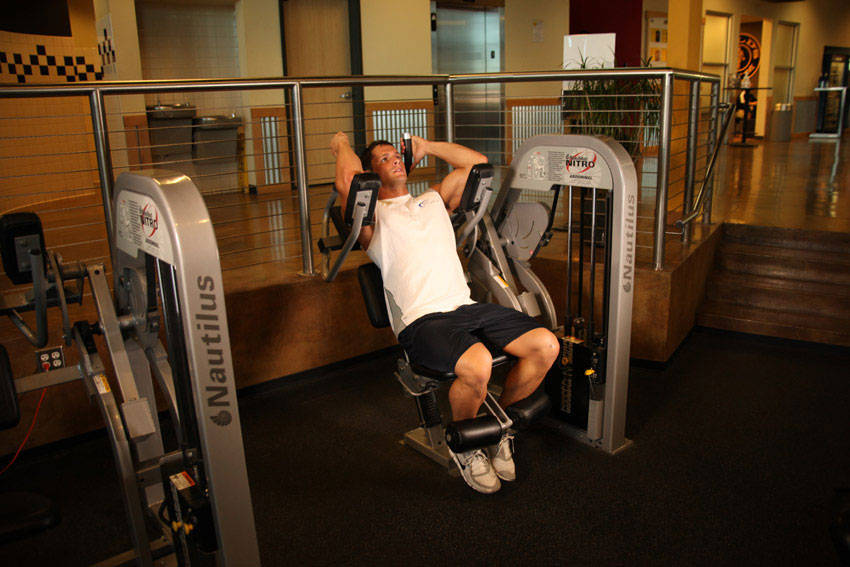
Both movements provide adjustable resistance. The machine offers more support and a fixed path, while the cable requires you to control your kneeling position and decide how the torso moves.
The cable crunch may suit someone who wants more freedom to find a comfortable path. The machine may suit someone who prefers a supported setup. Neither is automatically more effective; repeatable technique and sensible progression matter more.
The movement may be dominated by the hip flexors or an unstable kneeling position. Use less weight, keep the hips still, and focus on curling the ribs toward the pelvis. Stop if the exercise causes pain rather than normal muscular effort.
Yes, gradually. Controlled spinal flexion is part of a crunch. Avoid an uncontrolled collapse or forcing a range that does not feel comfortable.
Facing the machine is the most common setup and keeps the cable path easy to monitor. Some people face away, but that changes the setup and requires more care with cable clearance. Use the version you can position safely and repeat consistently.
They can strengthen the abdominal muscles, but they do not selectively remove fat from the abdomen. Changes in body fat depend on overall energy balance and long-term habits, not one exercise.
Effective cable crunches are controlled torso curls, not heavy kneeling pull-downs. Keep the hips stable, allow the spine to flex within a comfortable range, and choose a resistance you can return slowly.
Add cable crunches to a training routine and record the stack, repetitions, and progression with Jijibisha.
Swap it
Different equipment, same muscle
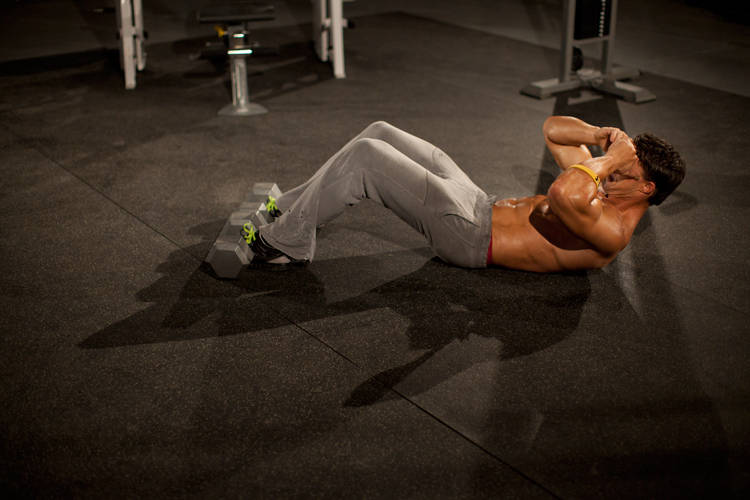
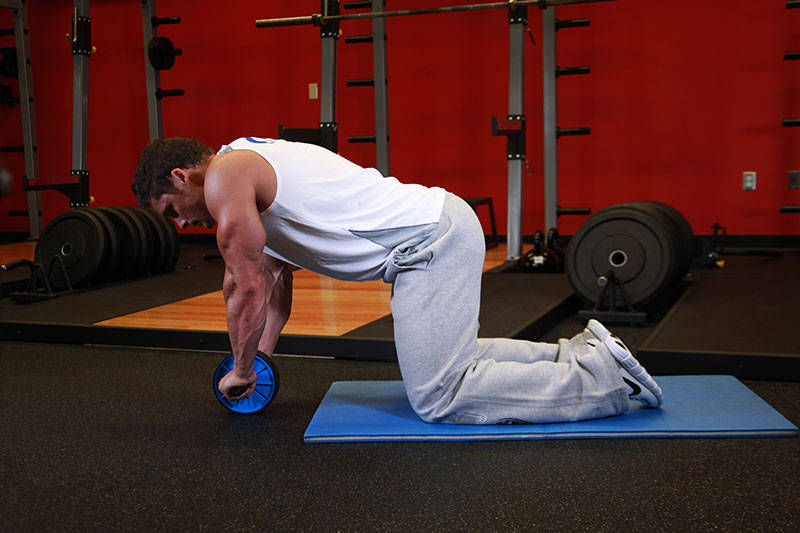
These movements also target the abdominals using something else.
Related
Get the app
Add it to a routine, record every completed set, and keep the workout saved on your phone even when the gym has no reception.